LEARN and EARN!
Get your RV Technician Certification in as little as 5 weeks!
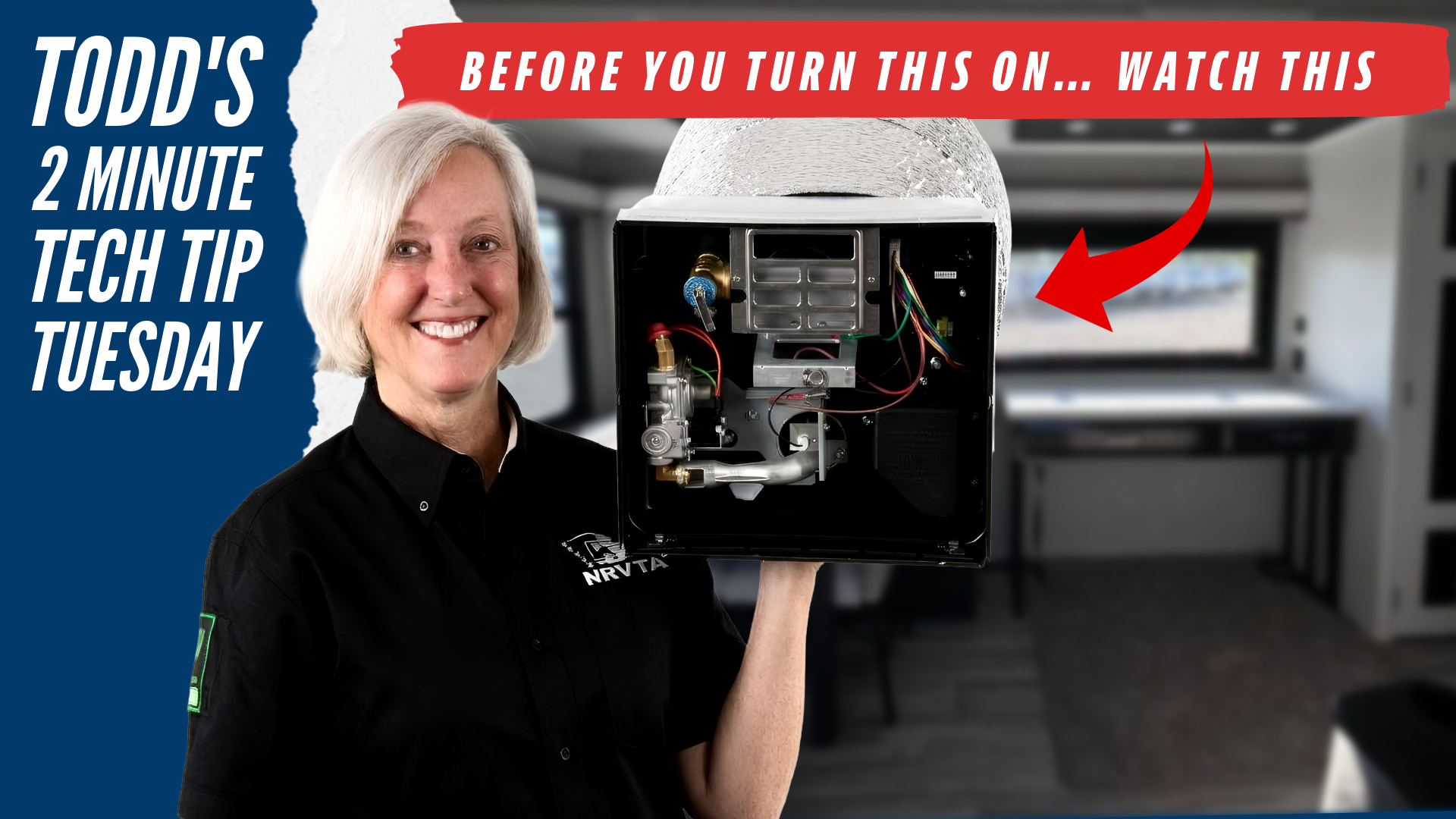
Understanding Your Dometic RV Water Heater
When you first open the outside panel of your RV water heater, it can look overwhelming. Wires, components, and connections make it seem complicated. But once you understand the basics, it becomes much easier to manage and maintain.
A Dometic water heater in your RV is designed to do one simple job: heat water. However, what makes it unique is how it safely manages temperature and pressure while doing that job.
Gas and Electric Heating Options
One of the most important things to understand is that this system is a combination unit. That means you can heat your water using propane or electricity.
When using propane, the system ignites a flame inside a burner chamber. That heat transfers through a flue tube and warms the water in the tank. When using electricity, a heating element powered by 120 volts AC performs the same task without a flame.
Both methods are effective, and both rely on the same internal safety systems to operate correctly.
Temperature Regulation and Safety Controls
While heating water is simple, controlling that heat is where things get more advanced. Inside the unit are components designed to monitor and regulate temperature continuously.
The thermostat keeps the water within a normal operating range. It cycles on and off to maintain consistent heat without overheating. If this system were to fail, a backup safety called the ECO steps in to shut everything down at a higher temperature threshold.
These layered protections ensure that your RV water heater system operates safely under normal conditions.
Built In Protection Systems
There are several additional safety features working behind the scenes.
A thermal cutoff is designed to stop power if a flame escapes the burner chamber. This prevents damage to wiring and nearby components.
The pressure and temperature relief valve provides another level of protection. If the tank reaches extreme pressure or heat levels, it opens to release that pressure safely.
Even the drain plug plays a role. It is designed to fail under extreme temperatures, allowing pressure to escape as a last resort.
All of these systems work together to prevent dangerous situations and protect both the unit and the RV.
How the Gas System Works
On the propane side, a control board acts as the brain of the operation. It sends power where it is needed and controls when the system starts and stops.
The gas valve regulates propane flow and only allows fuel into the burner when conditions are correct. Once ignited, the flame heats the internal components, which in turn heat the water.
This process is efficient and widely used in RVs because of its reliability.
How the Electric System Works
The electric side follows a similar process but replaces the flame with a heating element. Once all safety checks are satisfied, the system sends 120 volts to the element, which heats the water directly.
This option is especially useful when connected to shore power, allowing you to conserve propane.
Why This Matters for RV Owners
Understanding how your water heater works gives you confidence as an RV owner. It helps you troubleshoot issues, recognize normal operation, and most importantly, understand the safety systems that protect you.
The key takeaway is simple. Heating water is easy. Controlling heat and pressure safely is where the real engineering happens.
If you want to go deeper into systems like this, exploring professional RV technician training can give you the knowledge and skills to handle these components with confidence.



Get Registered Today!
Talk to a student advisor to learn more!