LEARN and EARN!
Get your RV Technician Certification in as little as 5 weeks!
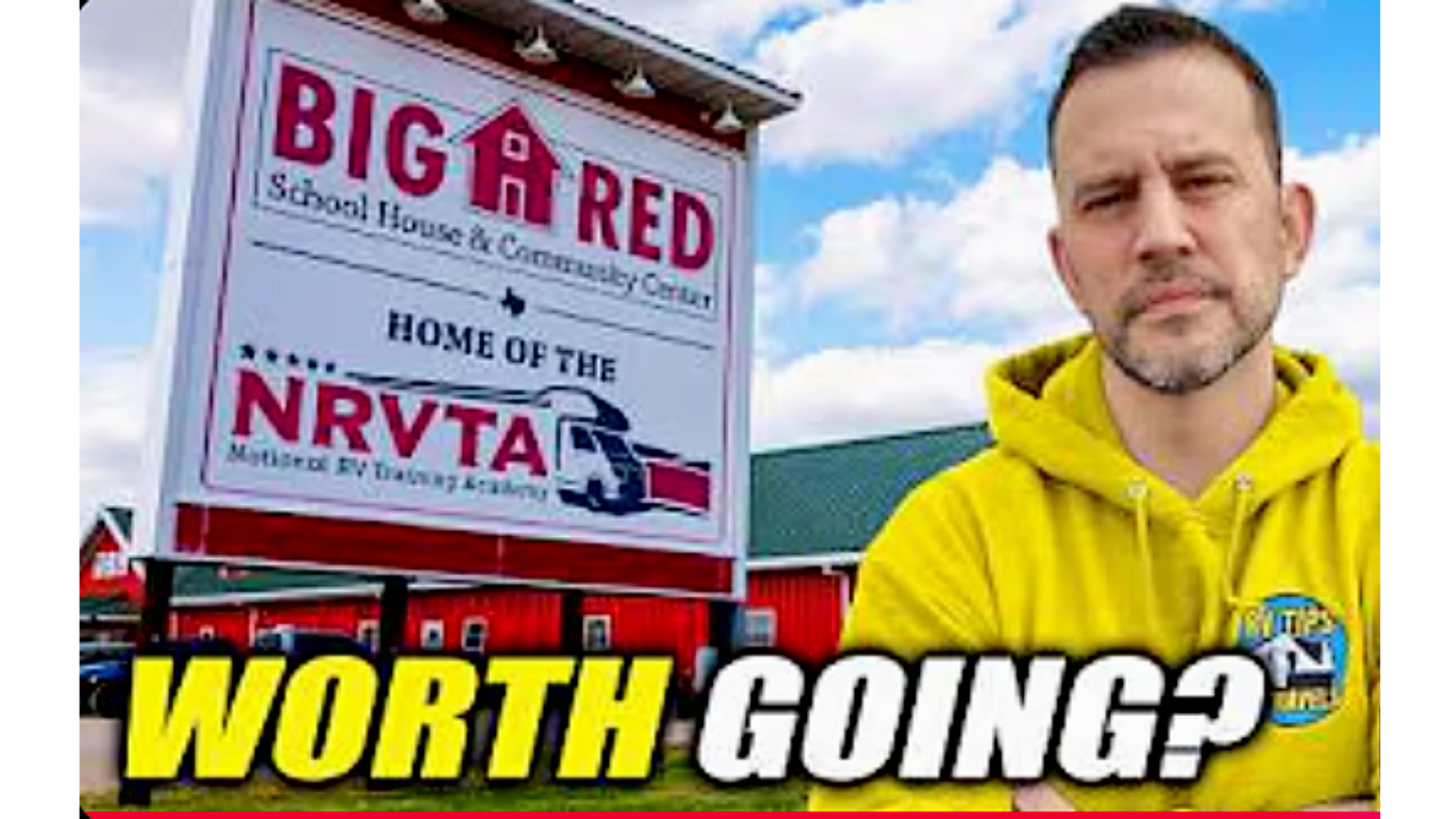
Three airports, four flights, one rental car, abnormally cold weather, and nine days later—I’m back from Athens, Texas. It was a journey, but one well worth it. Why? Because Athens is home to the National RV Training Academy (NRVTA), and I had the chance to attend their week-long RV Fundamentals course.
Whether you’re a current RV owner, an aspiring technician, or simply someone who wants to better understand your rig, this post will walk you through my experience, what you can expect, and a weird little thing I learned that most RVers have never heard about.
What is the NRVTA?
The National RV Training Academy is the largest hands-on RV training academy in America. Nestled in the scenic campus of the Texan RV Park, the school operates out of the iconic Big Red Schoolhouse. While many students bring their RVs and stay on-site, I flew in and stayed in one of their charming tiny homes—a convenient and cozy option.
Downtown Athens is just a 15-minute drive away, with plenty of restaurants, shops, and even a Walmart for anything you might need.
Also worth noting: I experienced Texas in the 20s and 30s (yes, degrees!). So, bring layers—even when heading to a “hot state” like Texas.
What the Fundamentals Course Covers
The Fundamentals course is just that—a deep dive into every essential RV system. The course is taught by the legendary Todd Henson (you’ve probably seen him on YouTube), along with a team of knowledgeable instructors who guide you through daily labs.
Here’s a breakdown of the systems covered:
- Electrical systems: AC and DC power, batteries, converters, inverters
- Water systems: Fresh, gray, and black water operation and maintenance
- Propane systems
- Appliances: Furnaces, water heaters, ovens, refrigerators, air conditioners
- Chassis & exteriors: Brakes, bearings, axles, roof and sidewall construction
Each day, you’re given a booklet with detailed notes and summaries of the day’s topics—helpful for reviewing what may appear on the final test.
Labs: Where the Learning Comes to Life
What sets NRVTA apart from watching YouTube videos is the hands-on lab experience. You’ll work in small groups with instructors to diagnose and troubleshoot real issues on real equipment.
For example, you won’t just learn how a furnace works—you’ll test voltage, inspect components, and learn exactly what to look for when it stops working.
It’s a fast-paced week (think: drinking from a firehose), but the instructors do a great job of breaking down complex systems into digestible lessons.
Why I Attended (and Why You Should Too)
I didn’t go to NRVTA to become a certified RV technician. I went to gain knowledge—so I could better understand my rig and share that info with others. But I still decided to stay an extra day and take the Registered Technician exam, which now puts me on the industry map as a certified tech.
Here’s why I think every RV owner should take this course:
- RV repair shops aren’t always nearby
- Your nearest dealer might not service your specific brand
- You could wait weeks or months for a simple repair
- DIY knowledge saves time, money, and your camping season
Even doing one or two basic repairs yourself could easily cover the cost of this course.
The Real Value: Learning How to Think Like a Technician
The biggest takeaway for me? Learning the thought process behind diagnosing RV issues.
Let’s say your furnace isn’t working. Most people would jump to check the propane. But that’s not the first step.
You’d start by checking if your thermostat has 12V power. If it doesn’t, there’s your issue. If it does, is it sending the signal to the furnace? Is it set to the right temperature? Then, does the fan spin up? If not, maybe there’s a DC voltage issue preventing the sail switch from engaging. If it does spin up and you hear the “tick tick tick” of ignition but still no heat? Now you’re likely dealing with a propane issue.
Knowing the order of operations helps you work smarter—not harder.
You’ll also learn basic maintenance tricks, like vacuuming around your furnace to keep the sail switch clear of pet hair. Little habits that prevent big headaches.
What If You Can’t Make It to Texas?
While I highly recommend the in-person experience, NRVTA also offers a Home Study Course. It’s a great alternative if traveling isn’t in the cards right now. You won’t get the same hands-on labs, but you’ll still gain a ton of valuable knowledge.
👉 Check out the Home Study Course here — and use the discount link for savings!
The Weird Little Thing I Learned
Here’s something no one talks about: If you have an absorption refrigerator, there’s a drip hose that exits out the back of the unit to the outside of your RV. On the end of that hose is a plastic cap with tiny holes.
Those holes aren’t random—they serve a very specific purpose.
They allow water to pass through during drainage, but also block outside hot air from entering back into the fridge when water flow stops. It acts like a mini valve or a P-trap, helping maintain cooling efficiency.
So, if yours is missing—go get one!
Final Thoughts
If you’re an RV owner—regardless of whether you want to become a technician—I can’t recommend NRVTA’s Fundamentals course enough. It’s practical, empowering, and you’ll leave with the confidence to handle many common RV issues yourself.
A huge thank-you to Todd, Tony, Brenda, and everyone at NRVTA. It was a fantastic experience—and Todd, I’m still waiting on that Big Beard Battery T-shirt!
Got questions about the course or want to share your own NRVTA story? Drop a comment below!



Get Registered Today!
Talk to a student advisor to learn more!