LEARN and EARN!
Get your RV Technician Certification in as little as 5 weeks!
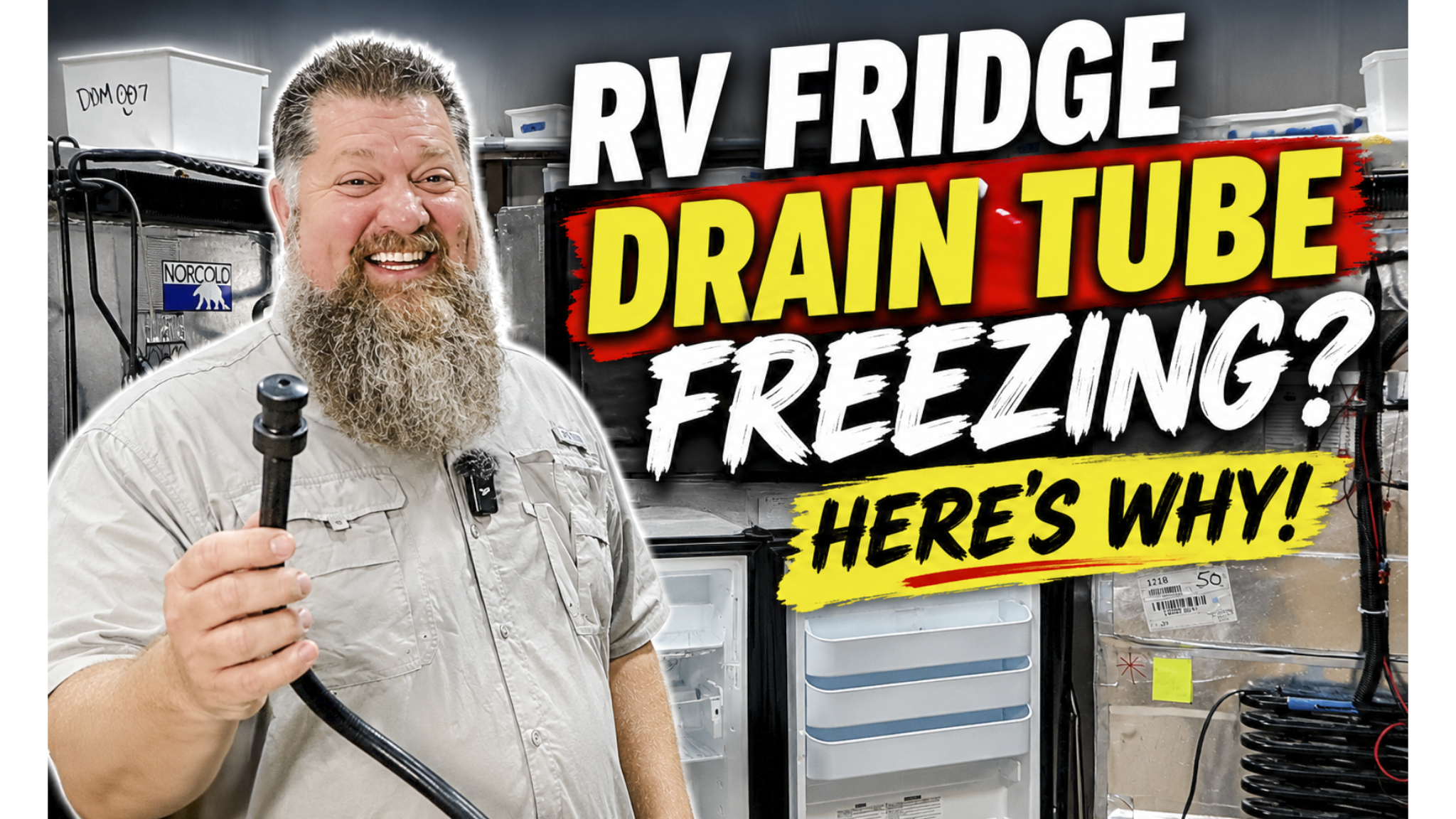
RV refrigerator drip tray freezing is a common problem many RV owners encounter. Fortunately, you can often solve it with a few simple troubleshooting steps.
If you open your RV refrigerator and discover your RV refrigerator drip tray freezing, you are not alone. Many RV owners run into this problem, but you can usually solve it with a few simple troubleshooting steps.
In this edition of Todd’s Two Minute Tech Tip Tuesday, Todd explains why an absorption style refrigerator develops ice in the drip tray and what you should inspect before assuming you have a major repair.
An absorption refrigerator removes heat from your food through evaporator fins inside the refrigerator. As those fins remove heat, moisture naturally forms on their surface. The moisture drips into a tray before flowing through a drain tube to the outside of the refrigerator.
This process is completely normal.
However, water should never freeze in the drip tray.
One common cause is that the refrigerator is simply running too cold. If you set the temperature too low, the evaporator fins can freeze along with the food inside. If your grapes are frozen, your refrigerator temperature likely needs attention. Place a thermometer inside the refrigerator and verify that it stays between 34 and 36 degrees.
Another common cause is warm air entering the refrigerator. Your refrigerator should maintain a tight seal whenever you close the door. If warm, humid air leaks inside, extra moisture builds up on the evaporator fins until ice begins to form.
Todd also explains that the drain tube normally holds a small amount of water because of its vented cap. This design allows condensation to drain while helping prevent warm outside air from entering the refrigerator.
If water starts collecting inside the interior drip tray instead of draining away, clean the drain tube and remove any buildup that could restrict water flow.
Todd recommends flushing the tube with warm water. He also suggests using hydrogen peroxide to help remove debris or buildup that could block the drain.
Next, inspect your refrigerator door seals. Dirty, damaged, or worn seals allow warm outside air to enter the refrigerator, creating additional condensation that eventually freezes.
One simple way to inspect the seals is with the dollar bill test. Close the refrigerator door on a dollar bill and slowly pull it out. You should feel the same amount of resistance all the way around the door. If the bill slides freely in one area, that section of the seal no longer creates a proper seal.
You can also perform a light test. Place a bright light inside the refrigerator and close the door. If you see light escaping around the door, outside air can enter through that same opening.
Todd also reminds RV owners that absorption refrigerators recover temperature much more slowly than residential refrigerators. Every minute you leave the refrigerator door open can require approximately one hour to recover the lost temperature. Organizing your food before opening the refrigerator helps reduce unnecessary heat and moisture entering the compartment.
Understanding how your refrigerator controls temperature and moisture makes troubleshooting much easier. Cleaning the drain tube, checking the refrigerator temperature, and inspecting the door seals often prevent larger cooling problems before they become expensive repairs.
If you enjoy learning practical troubleshooting skills like these, RV Technician Training at the National RV Training Academy teaches you how to diagnose and repair refrigerators, air conditioners, electrical systems, generators, plumbing systems, furnaces, and much more. Students receive extensive hands-on experience while learning the skills and confidence needed to troubleshoot RV systems correctly.
Whether you want to maintain your own RV or pursue new opportunities as a professional technician, the right training gives you the knowledge to solve problems with confidence.




Get Registered Today!
Talk to a student advisor to learn more!