LEARN and EARN!
Get your RV Technician Certification in as little as 5 weeks!
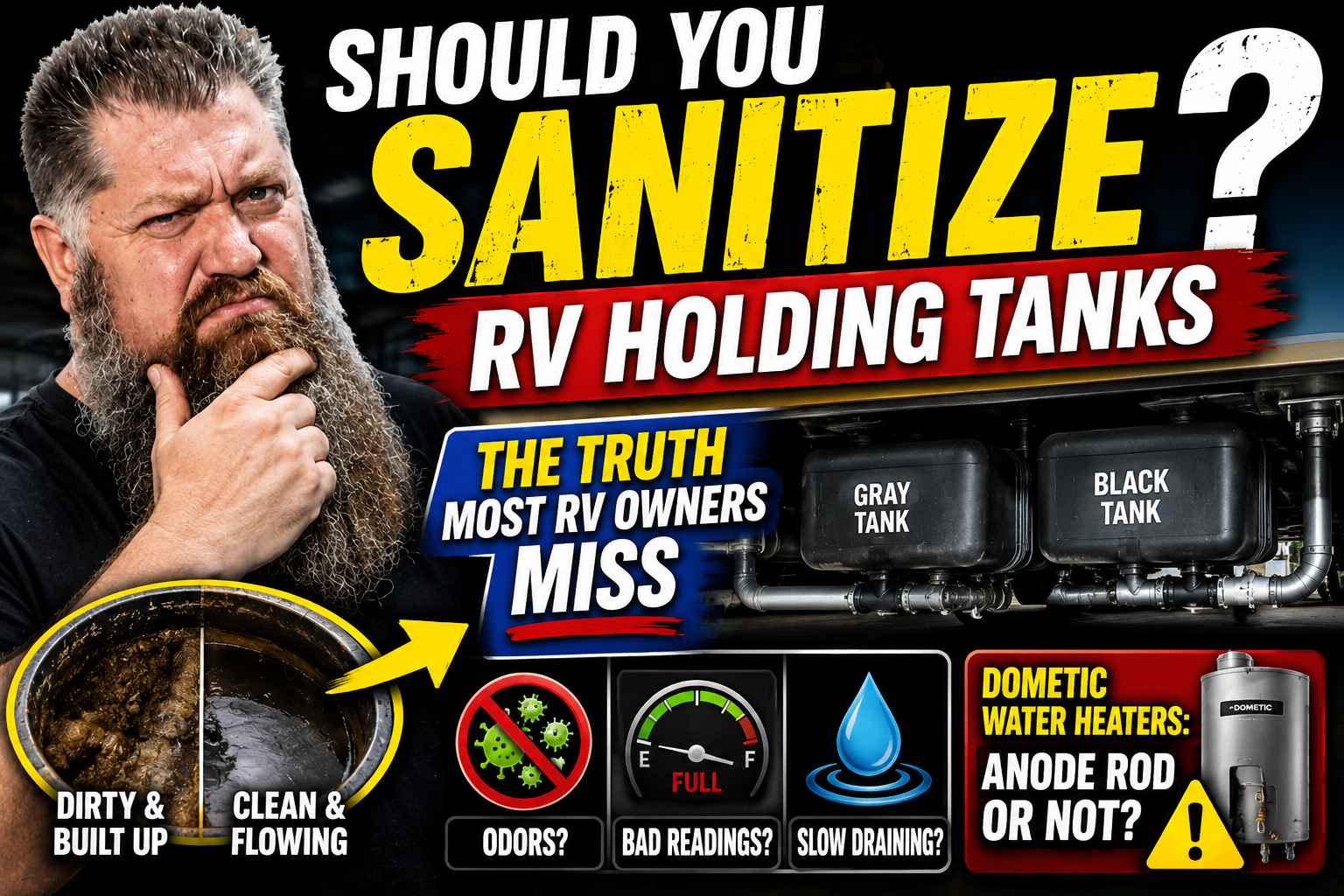
A common question RV owners ask is whether gray and black holding tanks should be sanitized. In this episode of Todd’s Two Minute Tech Tip Tuesday from the National RV Training Academy, Todd answers this question while also covering important information about RV tank maintenance and Dometic water heater care.
For many RV owners, holding tank maintenance can feel confusing. There are dozens of products on the market claiming to eliminate odors, clean tanks, or sanitize entire systems. However, Todd explains that sanitizing and servicing are actually two different things.
Do RV Gray and Black Tanks Need To Be Sanitized
According to Todd, there usually is not a need to sanitize gray and black tanks unless there is a serious odor problem or another unusual issue. Instead, the more important question is whether the tanks need servicing.
Servicing an RV holding tank involves maintaining the inside of the tank so waste and buildup do not create clogs, inaccurate sensor readings, or unpleasant smells.
Todd explained that buildup inside the tanks can interfere with tank sensors, causing inaccurate readings on the monitor panel. In many cases, RV owners believe their sensors are broken when the real issue is waste buildup coating the sensors inside the tank.
He also mentioned that diet, medications, and other personal factors can affect how much buildup forms inside the tanks. Some RV owners may rarely experience issues, while others may need more frequent maintenance.
Signs Your RV Holding Tanks Need Service
Todd shared several warning signs RV owners should watch for when determining whether tank service may be necessary.
These signs include:
- Slow draining tanks
- Gurgling sounds during draining
- Strong odors coming from the tanks
- Incorrect sensor readings
- Evidence of buildup inside the system
If an RV owner notices these symptoms, it may be time to service the tanks rather than simply adding chemicals or trying to mask odors.
Bacteria and Enzyme Treatments
Todd also discussed the use of bacteria and enzyme based tank treatments. Products designed for RV holding tanks can help break down solids and reduce buildup over time.
These treatments are often added directly into the black tank at recommended levels. Their purpose is to encourage the breakdown of waste materials and improve overall tank performance.
For RV owners dealing with heavier buildup, Todd explained that professional RV tank cleaning services may sometimes be necessary. These services use pressure-based cleaning equipment to remove stubborn debris and buildup from inside the tanks.
Dometic Water Heaters and Anode Rods
Another important question in the video involved Dometic water heaters and anode rods.
Todd explained that Dometic water heaters use aluminum tanks, which means they are designed differently from some other RV water heaters on the market.
Because of this design, Dometic specifically recommends against using an anode rod in their water heaters. Todd stated that installing an anode rod in a Dometic water heater can void the warranty.
Instead, these systems are designed to use a plastic drain plug.
According to Todd, the plastic plug also serves as a safety feature. If excessive pressure builds inside the tank because of a thermostat failure or overheating condition, the plastic plug can release pressure and help protect the system.
For RV owners unfamiliar with RV water heater maintenance, this is an important distinction because many people automatically assume every RV water heater requires an anode rod.
Understanding RV Maintenance Matters
One of the biggest themes throughout the video is the importance of understanding how RV systems actually work.
From holding tanks to water heaters, proper maintenance can help prevent expensive repairs, reduce frustration, and improve the overall RV ownership experience.
That is one reason why many RV owners turn to RV technician training programs and educational resources through the National RV Training Academy. Learning how systems function helps owners diagnose problems earlier and make better maintenance decisions over time.
Whether someone wants to become a professional RV technician or simply learn how to maintain their own RV more confidently, education plays a major role in avoiding common mistakes.



Get Registered Today!
Talk to a student advisor to learn more!