
LEARN and EARN!
Get your RV Technician Certification in as little as 5 weeks!
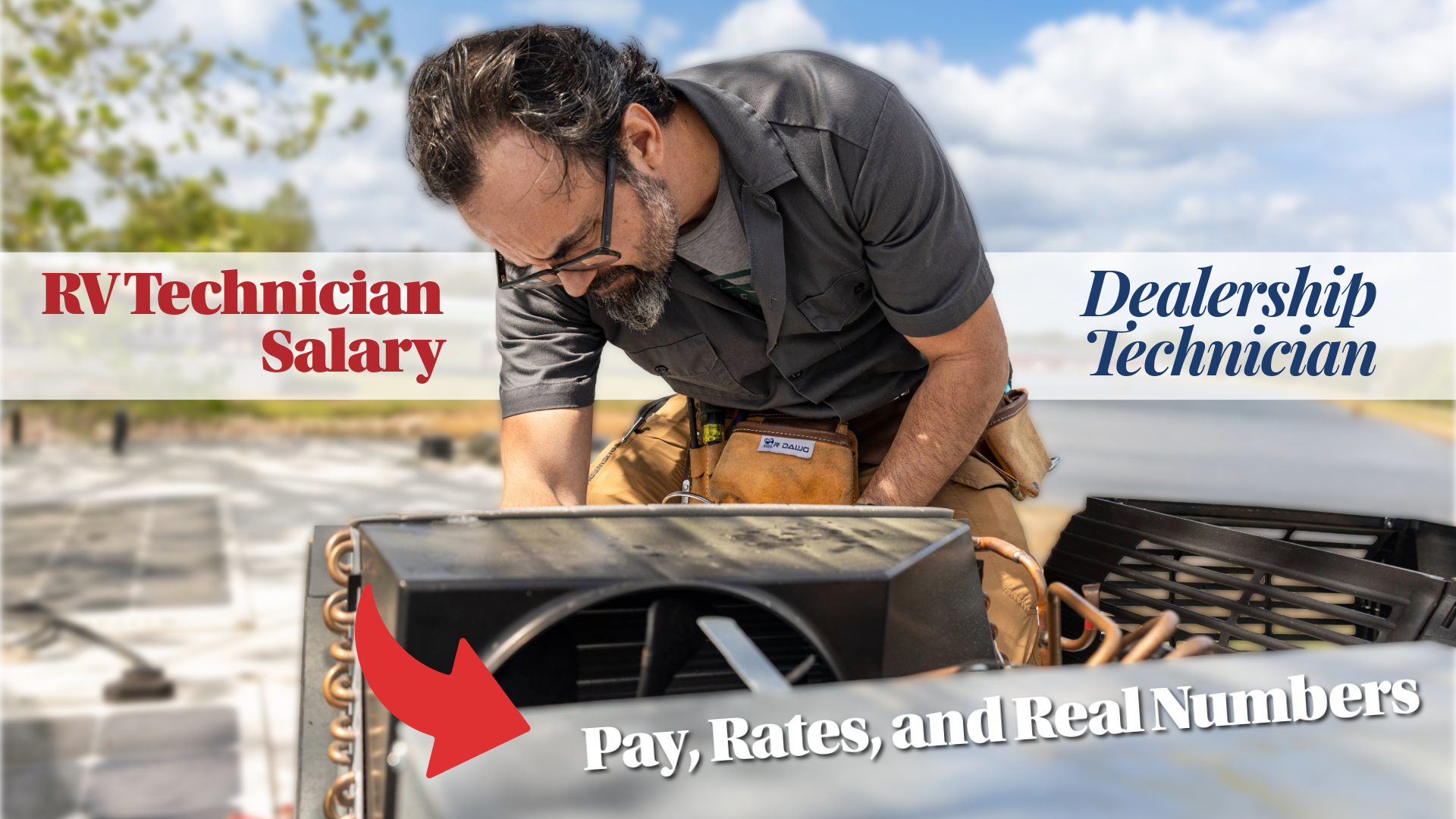
If you’re comparing career paths in the RV industry, one of the most searched questions is how an RV technician working at a dealership compares to a mobile RV technician when it comes to pay.
The answer is not as simple as one making more than the other. The difference comes down to how each role is structured. One is based on wages, while the other is based on service pricing and business revenue.

This article breaks down RV technician salary vs dealership technician pay using data from the U.S. Bureau of Labor Statistics and real-world pricing feedback from technicians trained through the National RV Training Academy so you can understand both paths clearly.
Quick Answer: RV Technician Salary vs Dealership Technician
- Dealership RV technicians are typically paid hourly or through flat-rate systems, with national wage data placing many in the range of approximately $47,000 to $50,000 annually based on BLS categories for service technicians.
- Mobile RV technicians operate as independent service providers and set their own pricing, often using service call fees and hourly labor rates based on their local market.
The key difference is this: dealership technicians earn wages, while mobile RV technicians generate revenue.
RV Technician Salary (Dealership Data)

Because the U.S. Bureau of Labor Statistics does not separate RV technicians into a standalone category, the closest comparison comes from automotive and specialty vehicle service technicians.
According to BLS data:
- Median annual wages are typically in the high $40,000 range
- Entry-level roles often start lower depending on experience and region
- Higher earners in the field can exceed $70,000 annually
This data reflects technicians working in structured environments like dealerships and service centers.
How Dealership Pay Works
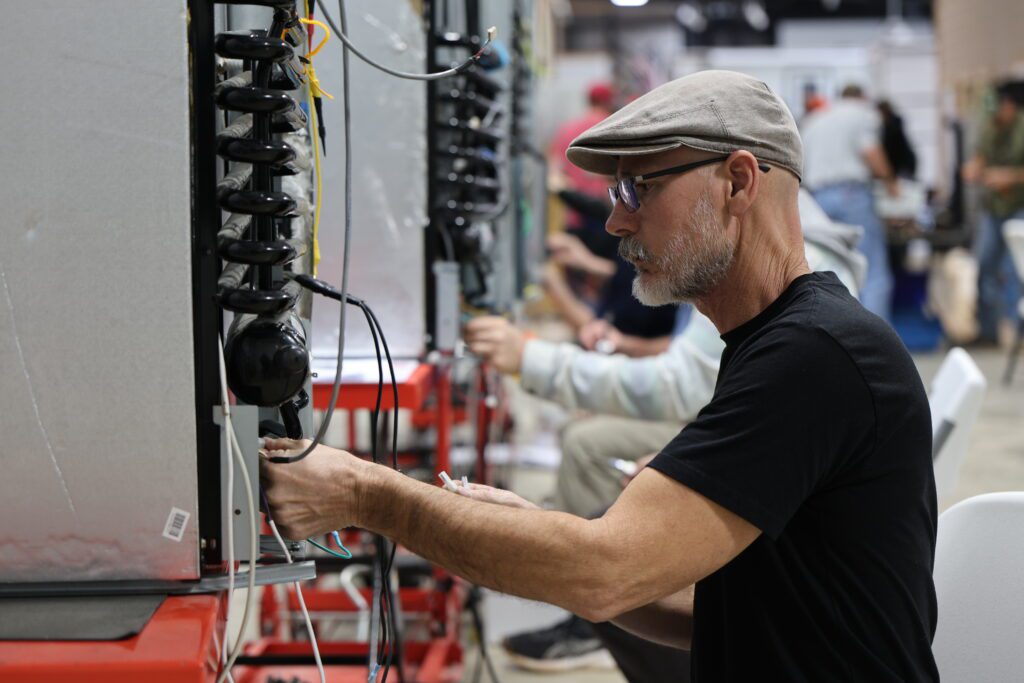
Dealership technicians are usually paid in one of two ways:
Hourly pay means a technician is paid for the time they are scheduled to work, regardless of how many jobs are completed.
Flat-rate pay assigns a standard labor time to each job. If a technician completes the job faster than the assigned time, they still earn the full amount. If it takes longer, the pay does not increase. This system rewards efficiency but can lead to variability depending on workflow.
In both cases, the dealership provides:
- A consistent stream of work
- Shop tools and infrastructure
- Customer acquisition and billing
This structure creates more predictable income, but less control over pricing and schedule.
Mobile RV Technician Pay (Field Pricing)
Mobile RV technicians typically do not earn a salary. Instead, they charge for services performed in the field.
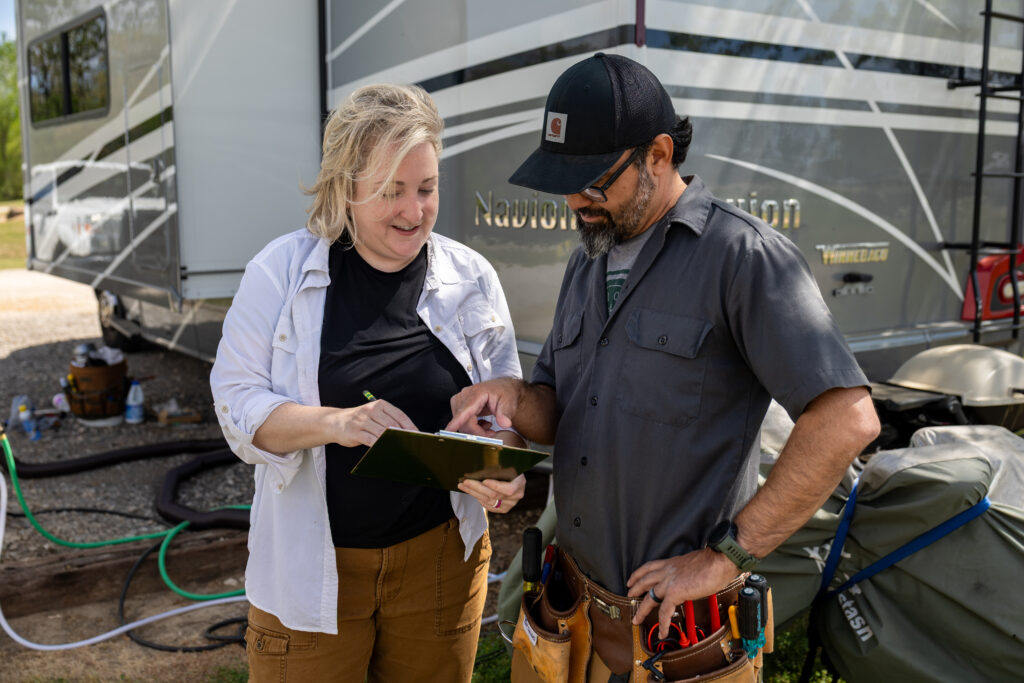
Based on feedback from technicians who have gone through training programs such as those at the National RV Training Academy, common pricing models include:
- A service call fee to cover travel and initial diagnostics
- Hourly labor rates after arrival
- Flat-rate pricing for common repairs or installations
Technicians in the field often report:
- Service call fees commonly discussed in the range of $100 to $200 depending on location and travel distance
- Hourly labor rates often discussed in the range of $100 to $150 per hour
These figures are based on technician feedback who have completed training programs and vary by region, experience, and demand.
RV Technician Salary vs Dealership Technician: Key Differences
| Category | Dealership Technician | Mobile RV Technician |
| Pay Structure | Hourly or flat-rate wages | Service call + hourly or flat-rate pricing |
| Income Type | Wages | Business revenue |
| Schedule | Set by employer | Set by technician |
| Customer Source | Provided by dealership | Self-managed |
| Expenses | Minimal personal cost | Business-related expenses |
This comparison highlights that the two roles are not directly equivalent. One is employment, the other is self-directed work.

Revenue vs Income: What Actually Matters
When comparing RV technician salary vs dealership technician pay, it is important to understand the difference between revenue and income.
Dealership technicians are paid wages. Their income is typically what they take home before taxes and personal expenses.
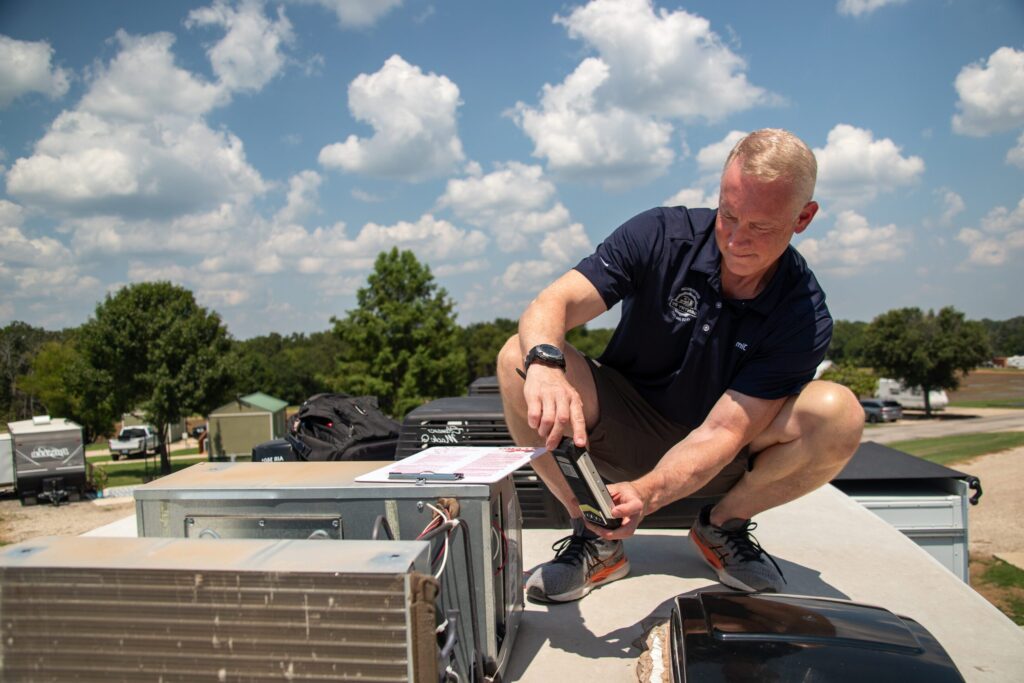
Mobile RV technicians generate revenue. From that revenue, they must cover:
- Fuel and vehicle costs
- Tools and equipment
- Insurance
- Business-related expenses
- Marketing or lead generation
After expenses, the remaining amount becomes income.
Actual results vary based on individual effort, market conditions, and business decisions.
What Impacts Earning Potential
Several factors influence how much an RV technician can earn in either path.
Location plays a major role. Areas with high RV usage, seasonal travel, or large campground populations tend to create more demand for service.
Skill set is another key factor. Technicians who can work across multiple systems—electrical, plumbing, HVAC, generators, and solar—are often able to take on a wider range of jobs.
Workload and availability also matter. A dealership technician may be limited by shop scheduling, while a mobile technician’s workload depends on demand and how many service calls they choose to take.
Work Environment and Lifestyle Differences
Dealership technicians typically work in a fixed location with access to shop tools and support staff. Their schedules are usually consistent, and they focus primarily on repair work.
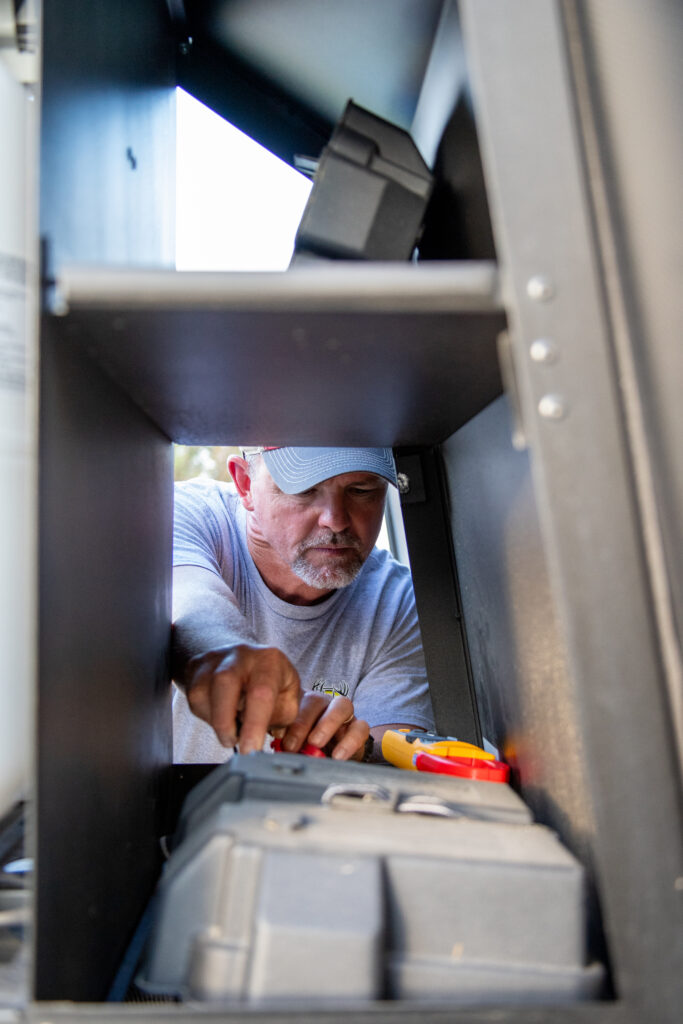
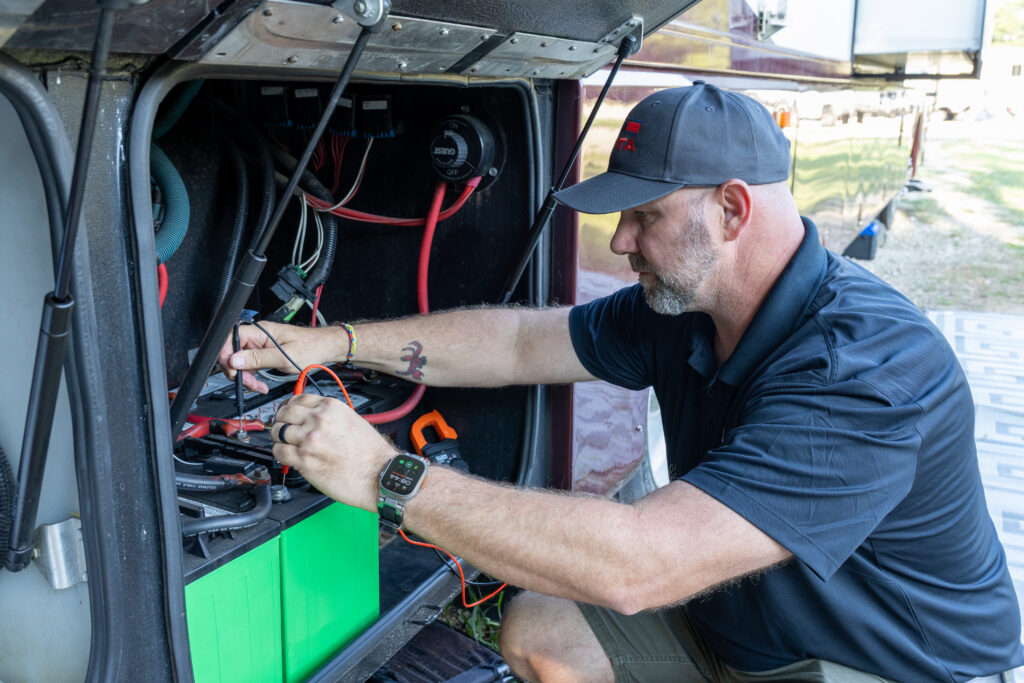
Mobile RV technicians travel to the customer. This can include campgrounds, homes, storage facilities, or roadside locations. They handle customer communication, scheduling, and service delivery directly.
This difference affects not only income structure but also day-to-day lifestyle.
Which Pays More?
There is no fixed or guaranteed income level for either path. The question of whether a mobile RV technician or dealership technician makes more depends on how each role is approached.
Dealership roles offer:
- More predictable pay
- Less responsibility for business operations
- Structured advancement within a company
Mobile RV technician work offers:
- Control over how services are priced and scheduled
- Flexibility in scheduling
- The ability to scale workload based on demand
Because one is wage-based and the other is revenue-based, direct comparisons can be misleading without considering expenses, workload, and business setup.
Choosing the Right Path
When evaluating RV technician salary vs dealership technician pay, the better question is not just how much each path pays, but how you want to work.
Some individuals prefer the structure and predictability of a dealership environment. Others prefer the flexibility and independence of working directly with customers in the field.
Both paths rely on the same foundational skills: diagnosing problems, understanding RV systems, and completing repairs safely.
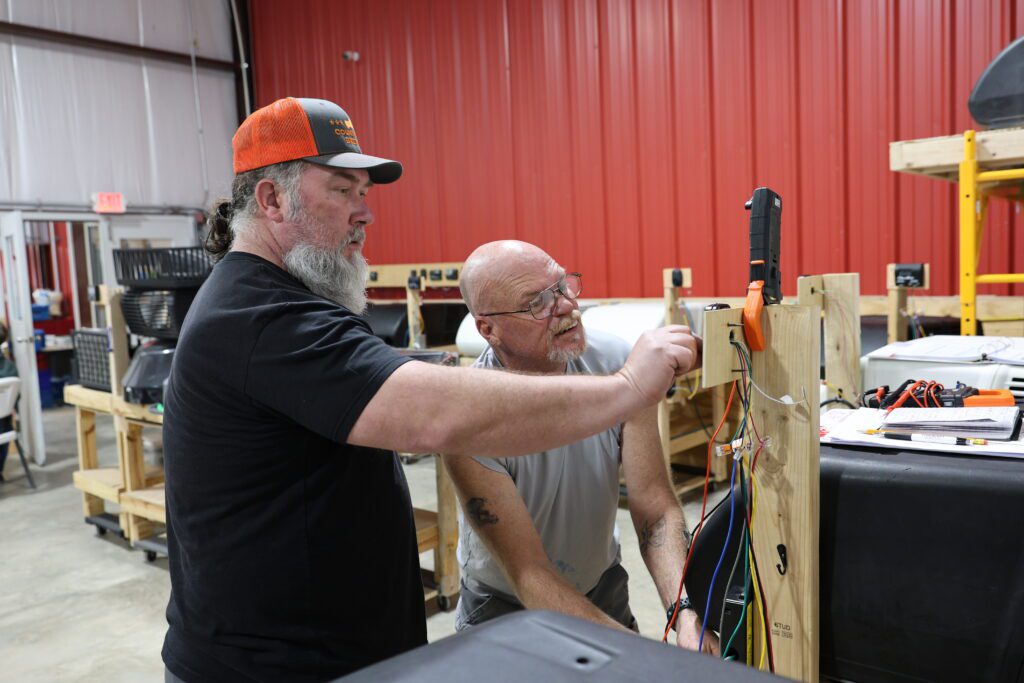
If you’re trying to figure out whether the RV technician path, or the business side of mobile service, is a good fit, it can help to talk it through with someone who sees it every day. A student advisor at the National RV Training Academy can walk you through what the training actually covers and what a realistic path into the field looks like based on your background and goals.
It’s not about making a decision on the spot, it’s about getting clear, practical information so you can decide whether learning RV repair and business fundamentals aligns with how you want to work and earn.


Get Registered Today!
Talk to a student advisor to learn more!