LEARN and EARN!
Get your RV Technician Certification in as little as 5 weeks!
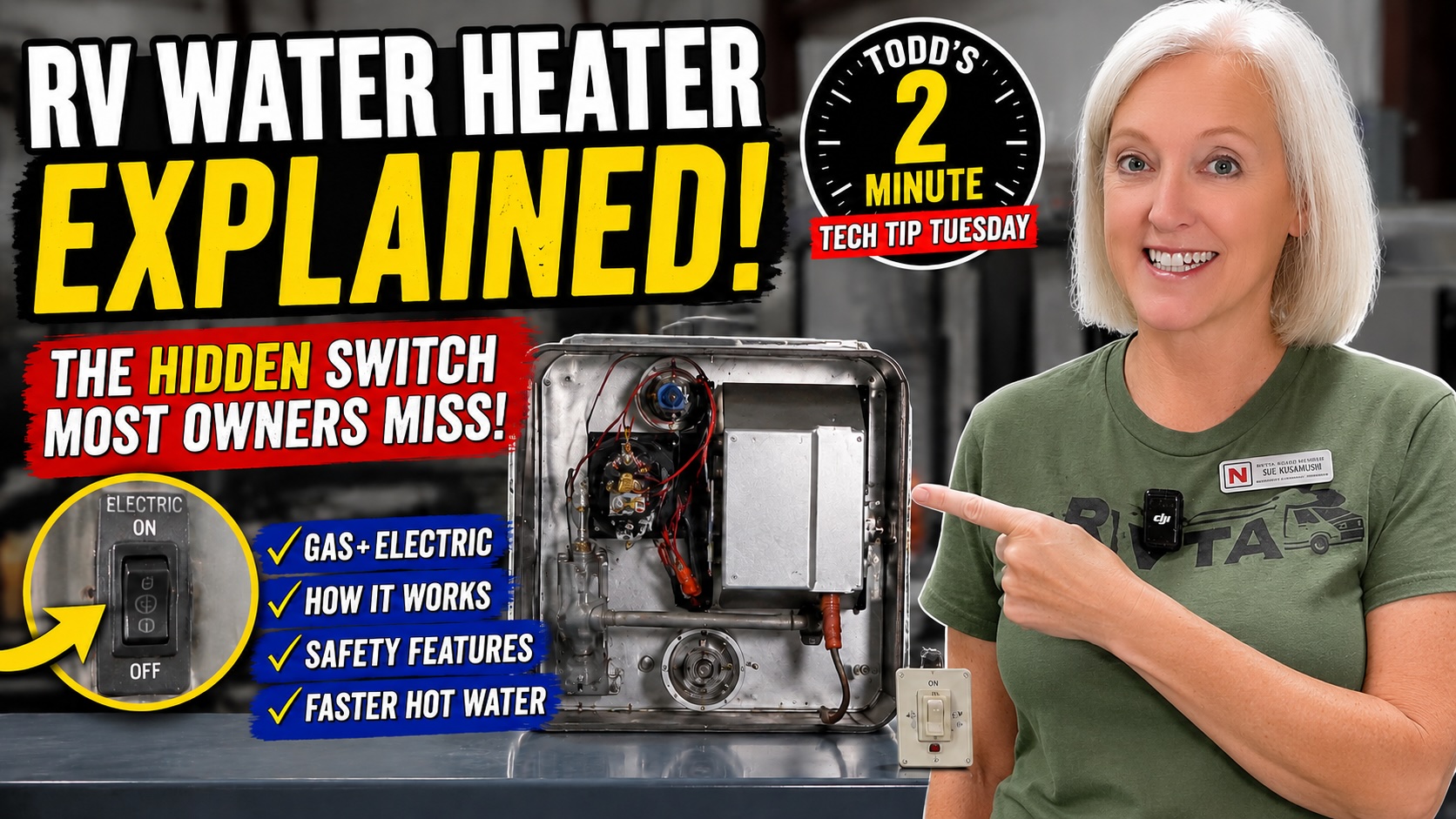
Understanding Your Suburban RV Water Heater
Your RV water heater is one of the most important systems in your coach. Most RV owners expect hot water to simply work, but very few understand what is actually happening behind the access panel.
In this Tech Tip Tuesday from the National RV Training Academy, Todd walks through how a Suburban gas/electric water heater operates and explains the safety features that protect both the system and the RV owner.
Understanding these basics can help you troubleshoot issues faster and use your RV water heater more effectively.
How an RV Water Heater Works
The primary purpose of an RV water heater is simple. It heats water for your sinks and shower.
A Suburban gas electric model can heat water in two different ways. It can use propane or an electric heating element powered by 120 volt AC power.
The heating element sits inside the tank itself. When power is applied, the element heats up and transfers that heat directly into the surrounding water.
This gives RV owners flexibility depending on whether they are connected to shore power or relying on propane while traveling or camping off grid.
Why Safety Features Matter
Heating water inside a closed tank creates pressure. Without built-in protection, excessive heat and pressure could create dangerous conditions.
This is why RV water heaters include multiple safety systems.
One of the most important components is the thermostat, often called the T stat. This device monitors tank temperature and cycles the heating process on and off to maintain safe water temperature.
Once the water reaches the target temperature range, the thermostat temporarily stops the heating process. As the water cools, it allows heating to resume.
There is also a second safety component called the ECO.
The ECO acts as a backup safety device. If the thermostat fails and the water keeps heating continuously, the ECO shuts the system down entirely to prevent overheating.
The Importance of the Pressure Relief Valve
Another critical safety component is the pressure and temperature relief valve.
This valve is typically located near the top of the water heater tank. If the temperature or pressure inside the tank reaches dangerous levels, the valve releases pressure and hot water to prevent tank failure.
This safety feature is extremely important because it serves as the final layer of protection if other systems fail.
The Hidden Switch Many RV Owners Miss
One of the most common discoveries RV owners make is learning that their electric water heater has a separate switch outside the coach.
On many Suburban DE models, the electric heating element is controlled by a small switch located directly on the water heater behind the exterior access panel.
Many owners assume the water heater only runs on propane because they never realized this switch existed.
This is a common source of confusion and one reason why understanding your RV systems matters.
How the Propane Side Operates
The propane side of the system uses a separate process.
When activated, power moves through another thermostat and ECO assembly before reaching the control board. The control board then sends power to the gas valve and the igniter system.
The gas valve allows propane to flow into the burner assembly while the igniter creates a spark.
Once ignition happens, the burner heats the water inside the tank.
Unlike the electric side, the propane system operates on 12 volt DC power.
Can You Use Both Gas and Electric at the Same Time
One of the most common questions RV owners ask is whether both heating methods can run simultaneously.
The answer is yes.
On a Suburban gas/electric water heater, both the propane burner and the electric heating element can operate together. This improves recovery time and allows the system to heat water faster.
For RV owners who want longer showers or faster hot water recovery, using both systems together can be extremely helpful.
Learning RV Systems Builds Confidence
Many RV problems become much easier to solve once you understand how your systems work.
Learning the basics of water heaters, electrical systems, propane operation, and safety devices can save time, reduce frustration, and help prevent expensive mistakes.
At the National RV Training Academy, students learn how RV systems operate in real-world situations so they can confidently troubleshoot and repair issues themselves or even start a career in the RV industry.



Get Registered Today!
Talk to a student advisor to learn more!