
LEARN and EARN!
Get your RV Technician Certification in as little as 5 weeks!
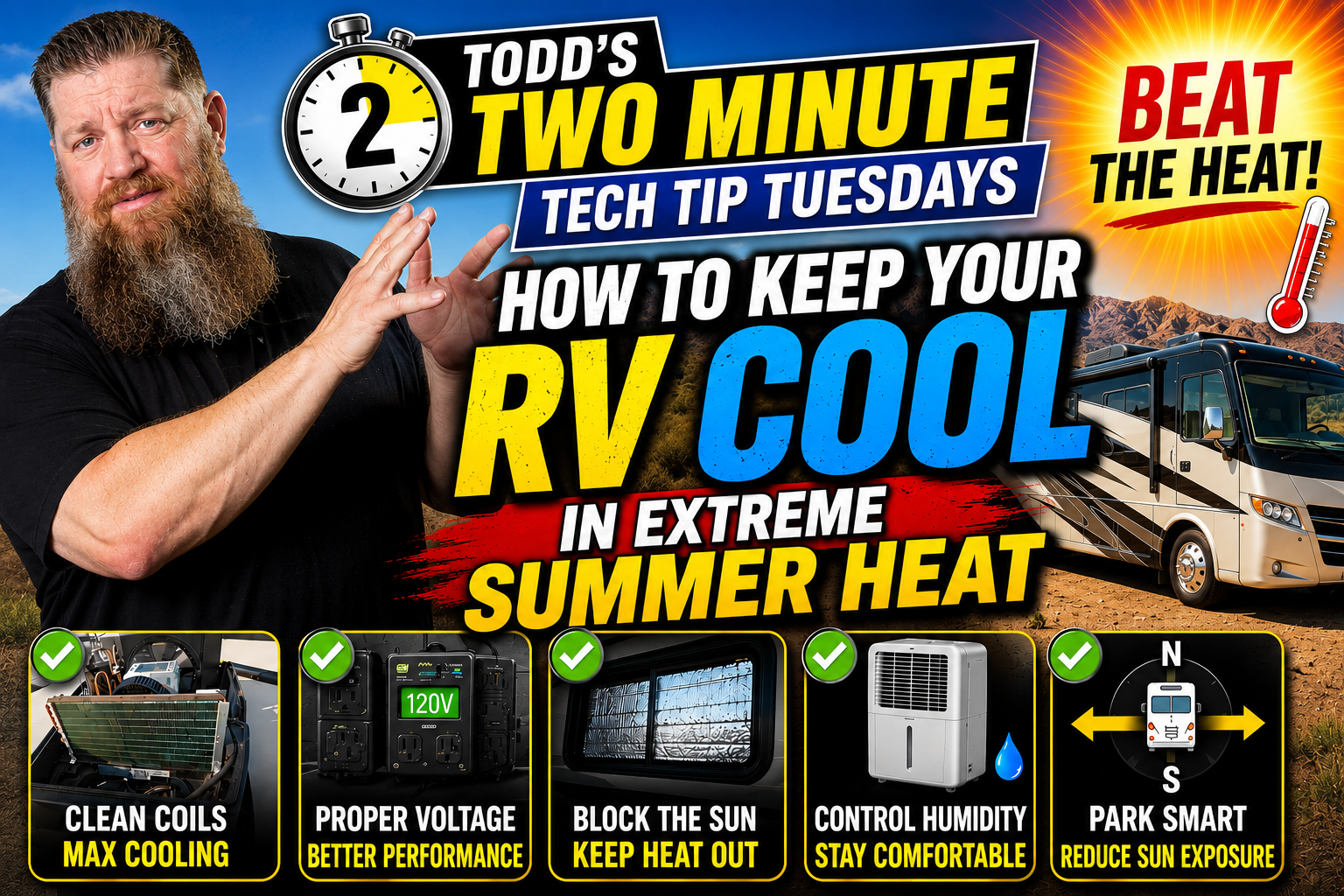
Hot weather can make RV camping uncomfortable fast, especially when temperatures climb, and humidity starts building inside the coach. In this episode of Todd’s Two Minute Tech Tip Tuesday, Todd from the National RV Training Academy shares several practical ways RV owners can keep their rigs cooler during the summer months while helping their air conditioners perform more efficiently.
One of the most important points Todd explains is that RV air conditioners do not actually create cold air. Instead, they remove heat from inside the RV. Understanding that concept changes how RV owners should approach cooling their campers in hot weather.
Start By Helping Your RV Air Conditioner Perform Properly
Before focusing on reducing interior heat, RV owners should first make sure the air conditioner is operating correctly.
One major factor is voltage. RV air conditioners need proper electrical power to perform efficiently. Low voltage conditions can reduce cooling performance and place unnecessary strain on the system.
Todd recommends using a surge protector that also monitors voltage levels. Devices such as electrical monitoring systems can help protect the RV while ensuring the air conditioner receives stable power.
Another important maintenance item involves cleaning the air conditioner coils. Because RV air conditioners rely on airflow and heat transfer, dirty coils make it harder for the system to remove heat from the RV.
Routine RV air conditioner maintenance can improve airflow and help the cooling system operate more effectively during extreme summer temperatures.
Reduce The Amount Of Heat Entering The RV
According to Todd, one of the best ways to keep an RV cooler is to prevent heat from entering the coach in the first place.
Windows are one of the biggest sources of heat gain inside an RV. If afternoon sunlight is directly hitting the windows, interior temperatures can rise quickly.
Todd suggests using reflective materials inside the windows and keeping curtains closed during the hottest parts of the day. These simple adjustments can significantly reduce solar heat entering the RV.
He explains that RV positioning matters. Parking the RV east and west instead of north and south reduces the amount of surface area exposed to direct sunlight throughout the day.
These small setup decisions can make a noticeable difference in interior comfort during summer camping.
Check For Heat Transfer Inside The RV
He recommends physically walking through the RV and feeling for warm spots around windows, walls, and doors.
If certain areas feel noticeably hotter, those locations may be allowing heat transfer into the coach. Addressing those areas with insulation, reflective barriers, or shading solutions can help improve cooling performance.
Keeping exterior doors closed as much as possible is another easy way to reduce heat intrusion.
Humidity Makes RV Cooling Harder
Humidity plays a major role in how comfortable an RV feels during the summer.
High humidity forces the air conditioner to work harder because the system must remove moisture before it can efficiently remove heat.
In humid climates, adding a small RV dehumidifier can help improve comfort and support the air conditioner’s performance. Lower humidity levels can make the RV feel cooler even when temperatures remain high.
For RV owners who do not have access to a powered dehumidifier, Todd also mentioned moisture absorbing products such as DampRid as a possible temporary solution.
Practical RV Cooling Tips Matter
Keeping an RV cool during summer camping often comes down to managing heat before it overwhelms the air conditioner.
By improving airflow, maintaining proper voltage, reducing sunlight exposure, controlling humidity, and keeping cooling components clean, RV owners can improve comfort and reduce strain on their systems.
These are the types of practical skills many RV owners learn through RV technician training and educational programs offered by the National RV Training Academy.
Understanding how RV systems function not only improves comfort during travel but can also help RV owners avoid unnecessary repairs and equipment failures over time.



Get Registered Today!
Talk to a student advisor to learn more!