LEARN and EARN!
Get your RV Technician Certification in as little as 5 weeks!

The short answer is yes.
In fact, many successful RV technicians begin their journey with little to no prior mechanical experience. While having a background in automotive repair, construction, HVAC, plumbing, or electrical work can certainly be helpful, it isn’t a requirement to start learning the trade.
One of the biggest misconceptions about becoming an RV technician is believing you have to “already know how to fix things.” The truth is that everyone starts somewhere. Every experienced technician was once the person asking basic questions, learning how systems worked, and gaining confidence one repair at a time.
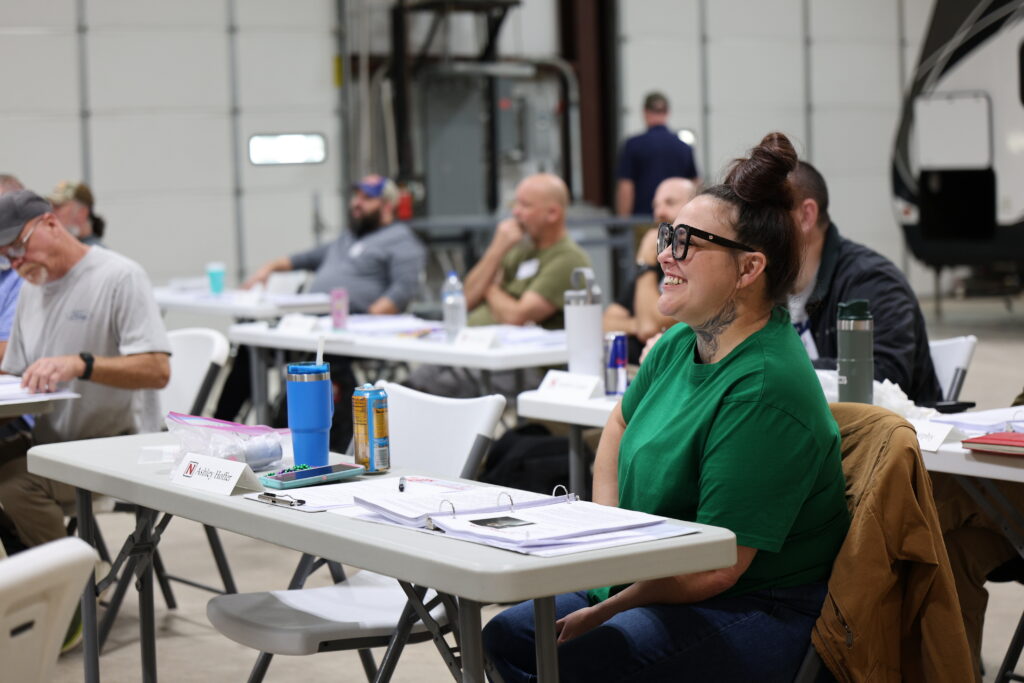
At the National RV Training Academy (NRVTA), we see this every week. Students come from every imaginable background. Some spent decades in corporate America. Others served in the military, worked in healthcare, education, transportation, manufacturing, or sales. Some have never picked up a multimeter before stepping into the classroom.
What they have in common isn’t years of experience; it’s a willingness to learn.
And that’s where real training makes all the difference.
The Biggest Myth About Becoming an RV Technician
Many people assume that RV technicians spend their days fixing random problems from memory.
That’s not how professional troubleshooting works. Experienced technicians aren’t guessing. They’re following a logical process built on understanding how each RV system is designed to operate. When you understand how a system is supposed to work, finding out why it isn’t working becomes much easier.
That’s why the foundation of good technician training isn’t memorizing repairs; it’s understanding systems.
Instead of teaching students to simply replace parts, quality instruction focuses on questions like:
- How does electricity move through this system?
- What role does propane play?
- Why does water flow this direction?
- What safety devices are involved?
- What sequence should components operate in?
- Where should testing begin?
Once you understand the system, troubleshooting becomes a process instead of a guessing game.
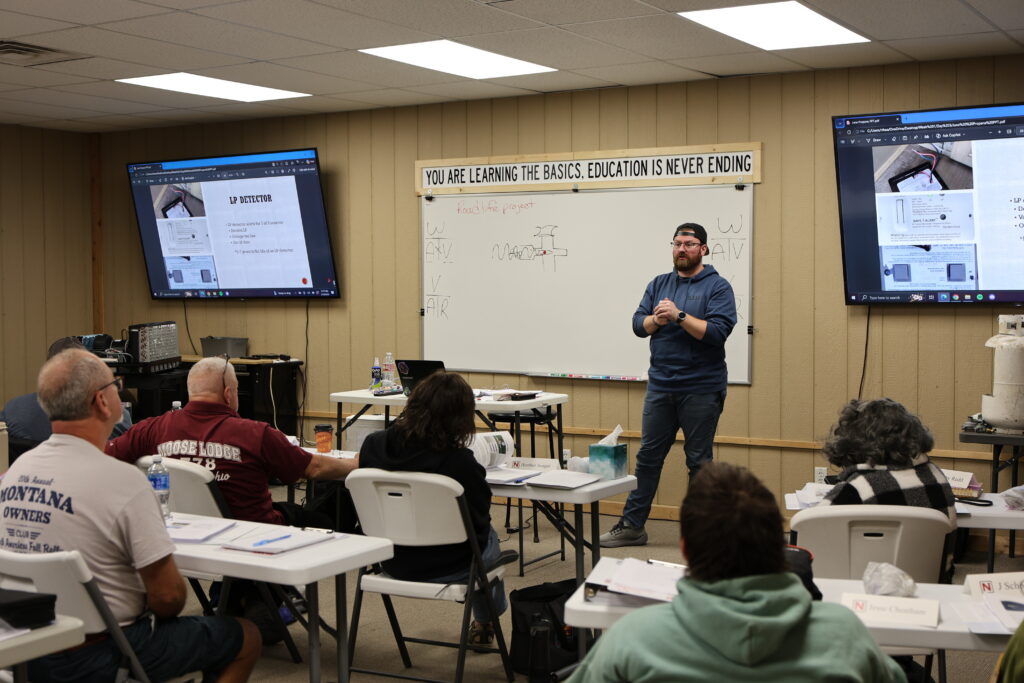
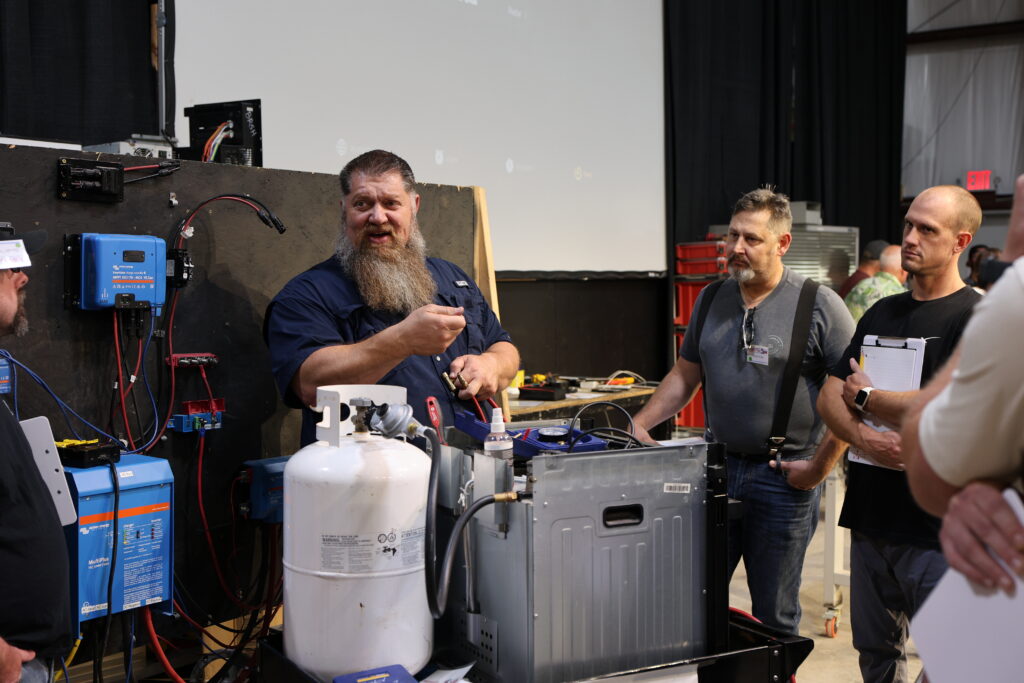
This systems-based approach is at the heart of NRVTA’s RV curriculum, where students learn to assess and troubleshoot key RV systems including DC electrical, AC electrical, propane, plumbing, refrigerators, air conditioners, water heaters, and furnaces through a combination of classroom instruction and hands-on lab work.
Most NRVTA Students Don’t Arrive as Experts
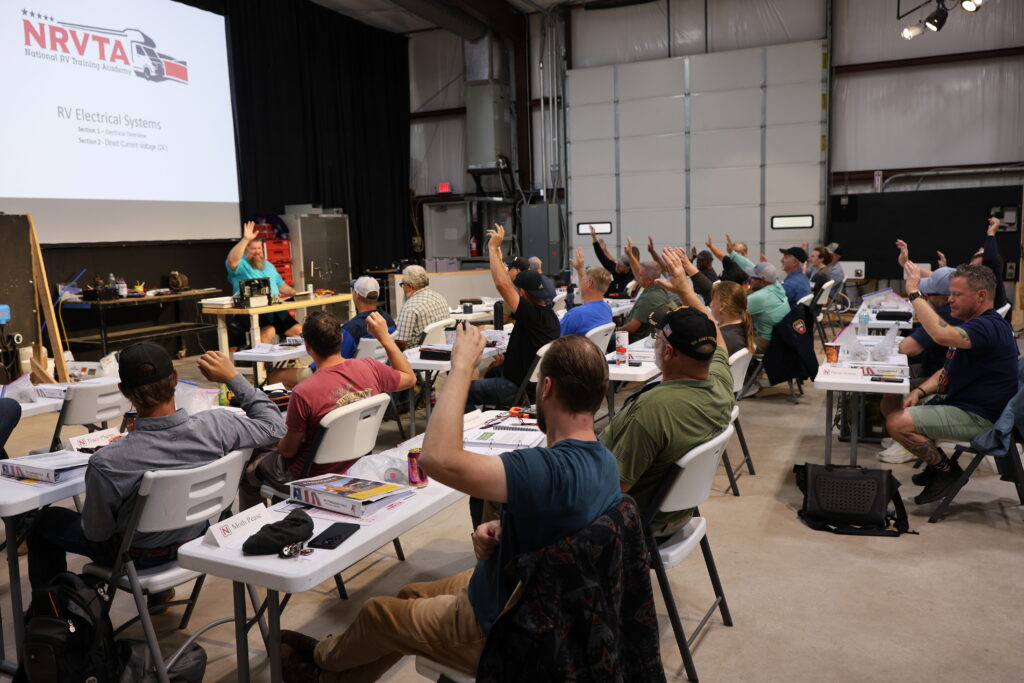
One of the most encouraging things new students discover is that they’re not alone. Walk into an NRVTA classroom, and you’ll meet people from all walks of life. Some have owned RVs for years but never felt comfortable repairing them. Others recently purchased their first RV and want to understand how everything works. Some are preparing for retirement and looking for a new career. Others want to start a mobile RV service business.
Many are simply looking for practical skills they can use for themselves and their families.
What surprises many first-time students is how many classmates openly admit:
“I’ve never done this before.”
That’s perfectly normal.
NRVTA was designed with beginners in mind.
The curriculum doesn’t assume years of experience. Instead, instructors start with foundational concepts before moving into more advanced troubleshooting and diagnostics.
More importantly, Students learn not only what each component does but why it works that way.
This makes the learning process far less intimidating.
In fact, Hands-On Training Changes Everything
Watching videos online can teach you terminology.
Reading service manuals can explain theory.
Neither replaces actually putting your hands on equipment.
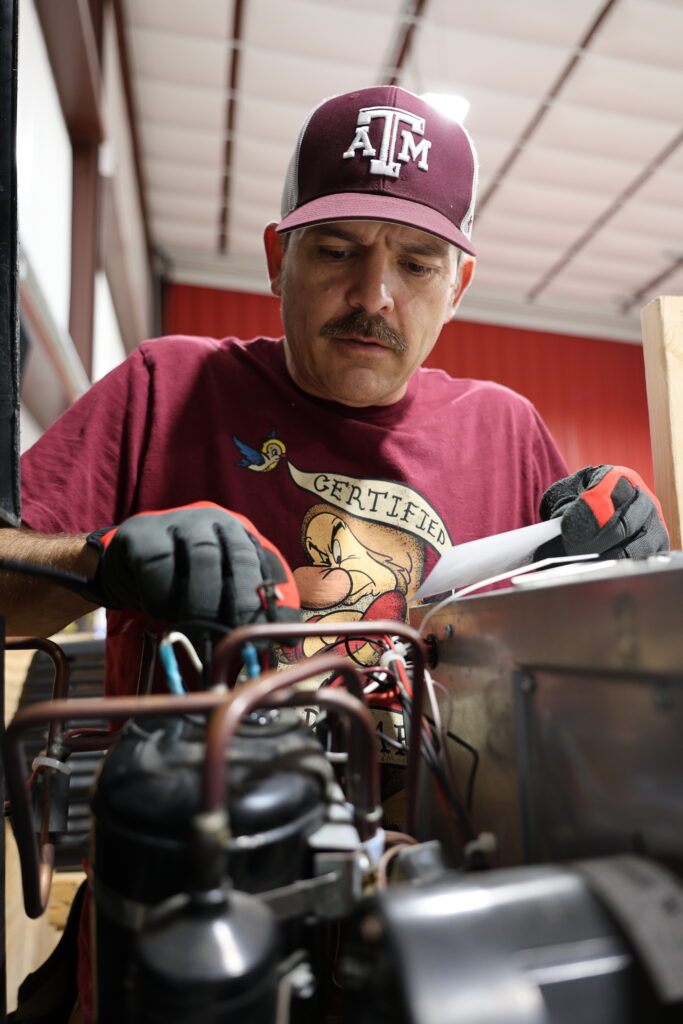
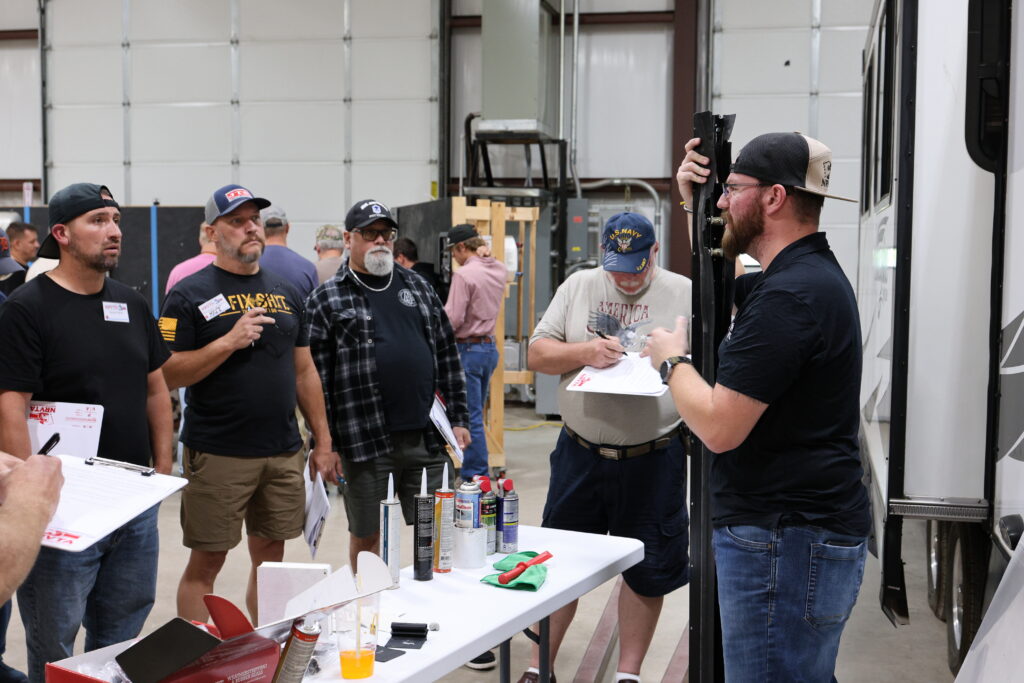
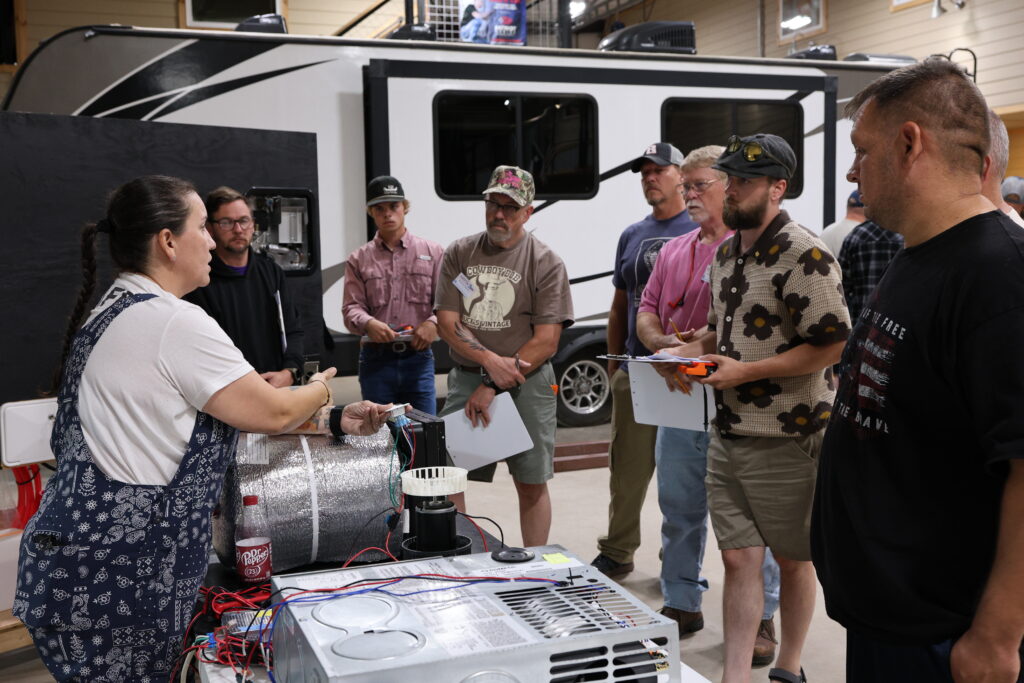
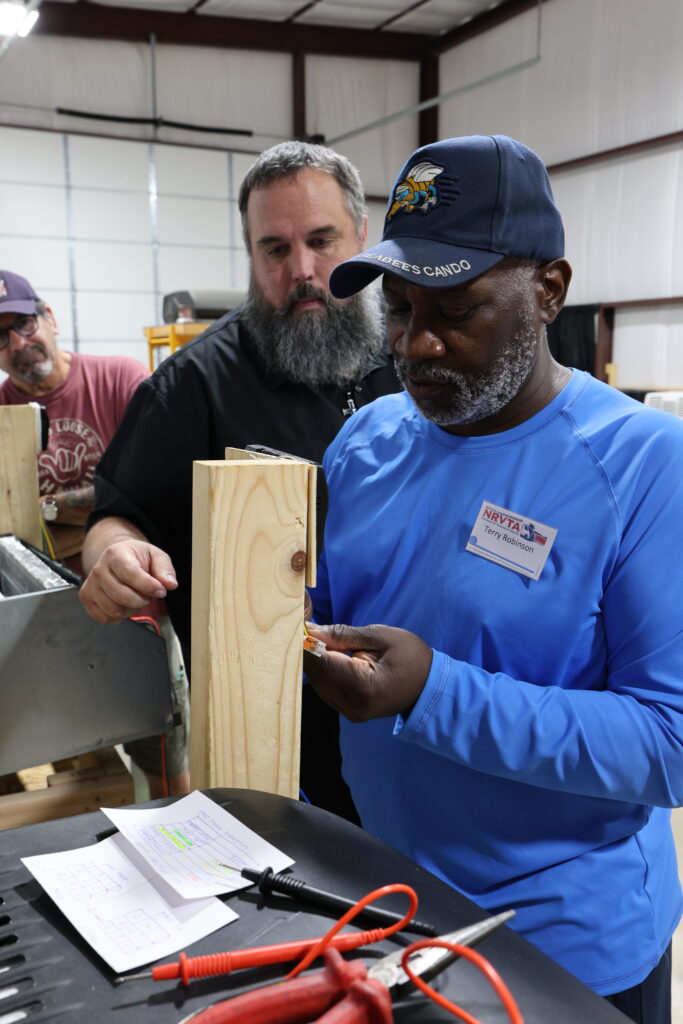
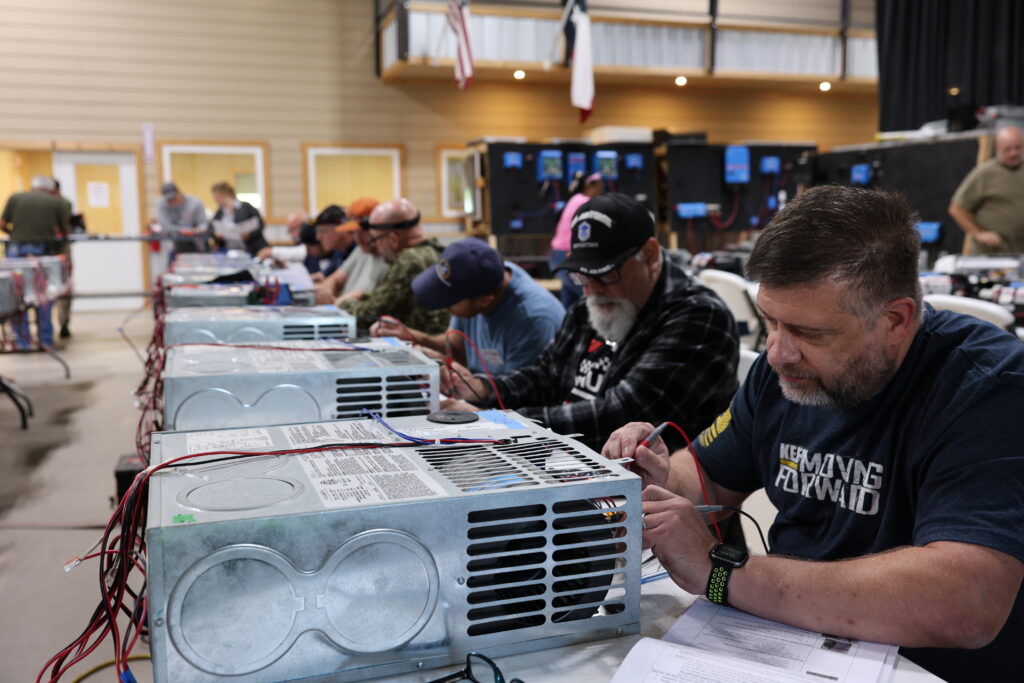
There’s a huge difference between watching someone troubleshoot an air conditioner and standing in front of one with test equipment while an experienced instructor explains each step. That hands-on experience builds confidence much faster than trying to learn everything alone.
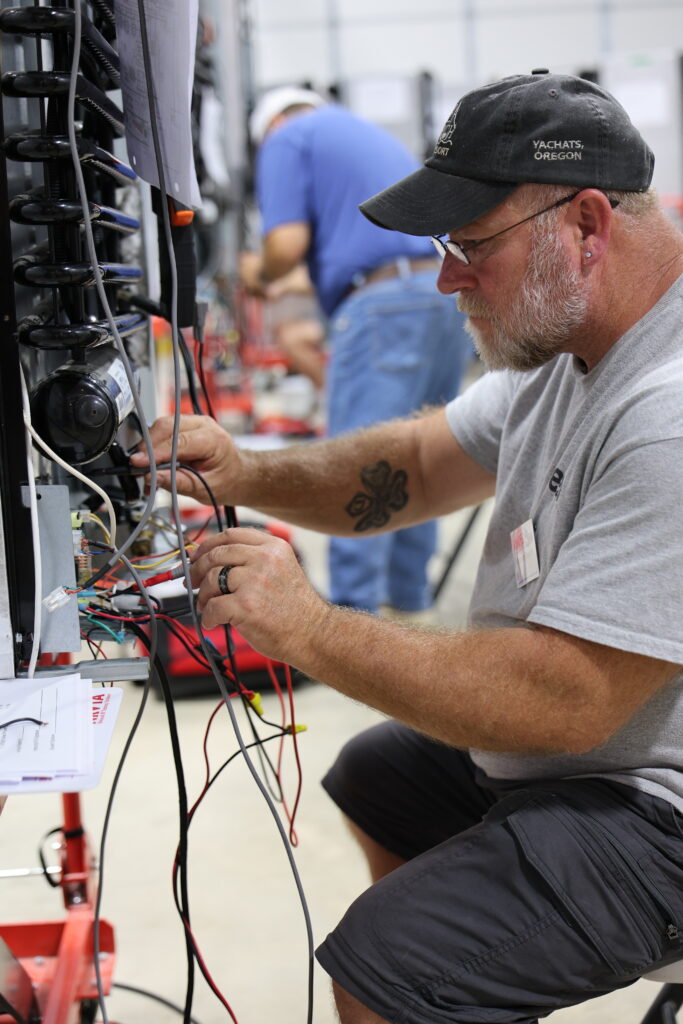
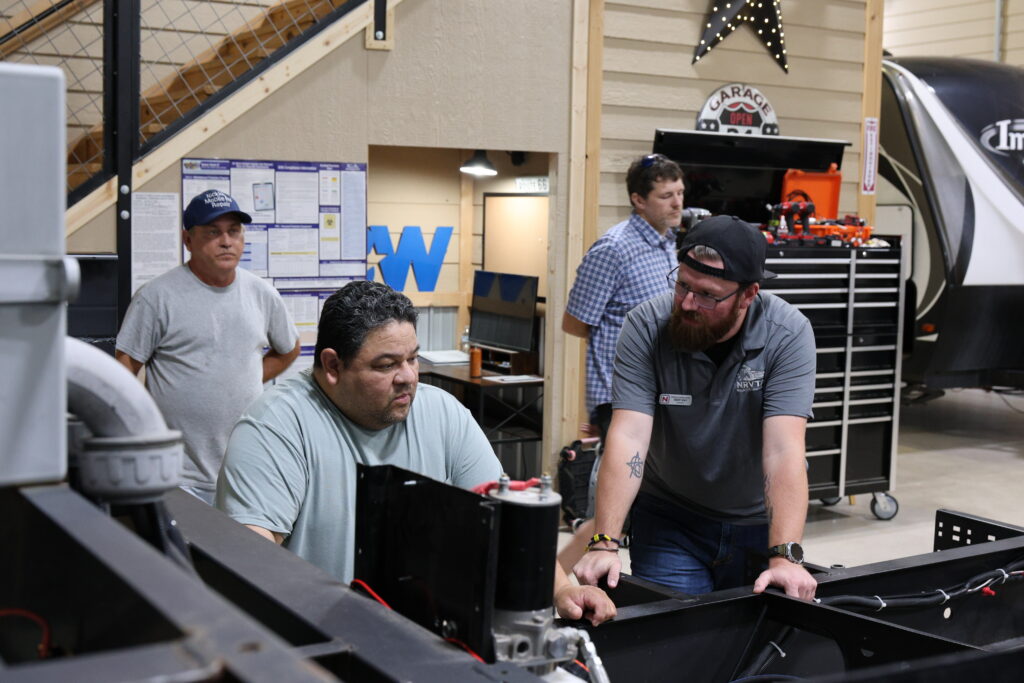
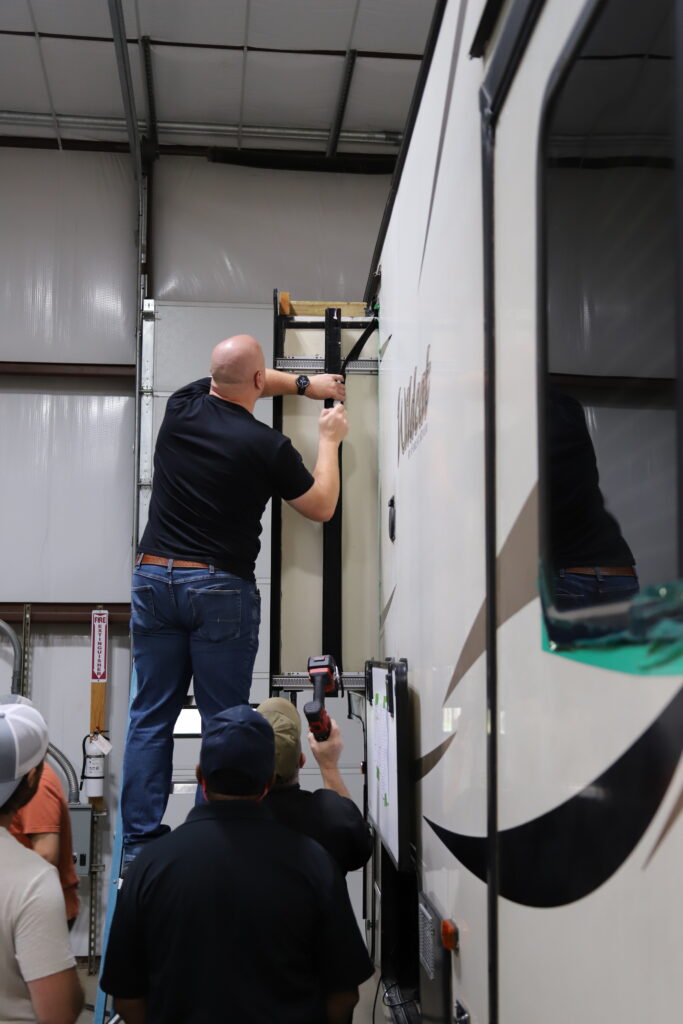
NRVTA’s training combines classroom instruction with practical laboratory exercises because troubleshooting isn’t something you truly learn until you’ve done it yourself. The school’s facilities include climate-controlled RV service bays equipped with RVs, appliances, and components specifically for hands-on learning, giving students opportunities to work directly with real systems.
Students don’t just hear about electrical systems…They test them.
They don’t simply memorize propane components…They inspect them.
They don’t just read wiring diagrams…They learn how to follow them during troubleshooting.
This combination of classroom learning and practical application helps bridge the gap between theory and real-world service.
You Learn Systems, Not Just RV Repairs
One of the unique aspects of learning RV service is that the knowledge extends far beyond recreational vehicles.
Think about what’s inside a modern RV.
You’ll find:
- Electrical systems
- Plumbing systems
- Propane systems
- Heating systems
- Air conditioning
- Refrigeration
- Water heating
- Structural components
- Roof systems
- Appliances
- Battery systems
These are all systems that exist in some form outside the RV world as well. Understanding how electricity flows through an RV can improve your understanding of electrical systems in a home. Learning plumbing principles inside an RV makes residential plumbing easier to understand. Studying refrigeration cycles helps explain how refrigerators work in general.
The same is true for heating systems, water heaters, batteries, and many diagnostic principles.
The equipment may differ. The underlying concepts often do not.
That’s why many graduates say they don’t just leave with RV knowledge—they leave with practical mechanical knowledge they use in everyday life.
Instead of memorizing one specific repair, you’re learning principles that transfer to countless situations.
And that’s exactly what strong technical education should accomplish.
As a result, Experience Comes After You Learn the Fundamentals
One question we hear often is:
“How can I get experience if no one will hire me without experience?”
It’s a fair question, and the answer is simpler than many people expect.
Every skilled RV technician started with zero experience.
The difference is that they first learned the fundamentals.
Think about any skilled profession. Electricians, HVAC technicians, plumbers, mechanics, and welders all begin by learning the basic principles before they develop years of real-world experience. Nobody expects a first-day apprentice to know everything. They expect them to have a solid foundation and the ability to continue learning.
The RV industry is no different.
A good training program doesn’t promise to teach you every repair you’ll ever encounter. That’s impossible. RVs are constantly evolving. Manufacturers introduce new components, appliances, electronics, and technologies every year.
Instead, quality training teaches you how to think like a technician.
When you understand the operation of a system, you don’t panic when you see a model you’ve never worked on before. You begin asking the right questions.
- What is this system supposed to do?
- What inputs does it require?
- What output should I expect?
- Where can I safely begin testing?
- What changed that caused the failure?
Those questions lead to answers far more reliably than simply replacing parts and hoping the problem disappears. That’s why experienced technicians often say they spend as much time diagnosing as they do repairing.
Troubleshooting Is a Skill You Build
One of the biggest confidence boosters for new technicians is realizing that troubleshooting is a skill—not a talent you’re born with.
Great technicians don’t need to be the smartest people in the room. They’re usually the most methodical.
Great technicians gather information first.
Next, they verify their assumptions.
Most importantly, they understand that symptoms and root causes are often different.
They understand that symptoms and causes are often different things.
For example, a customer may report that their refrigerator isn’t cooling.
That doesn’t automatically mean the refrigerator has failed.
The actual problem might involve:
- Low battery voltage
- A tripped breaker
- A failed control board
- A propane issue
- Poor airflow
- An installation problem
- Improper leveling
- A disconnected wire
Without understanding the system, it’s easy to replace expensive parts that were never broken. With proper training, technicians learn to isolate the real issue before making repairs. That’s a skill that grows stronger with every service call.
Confidence Doesn’t Happen Overnight
Many new students worry they’ll leave school expected to know everything.
That isn’t realistic. The goal isn’t perfection. The goal is confidence.
Confidence comes from understanding.
When you’ve spent time learning how electrical systems operate, tracing wiring diagrams, testing voltages, working with propane systems, and diagnosing appliances in a controlled learning environment, you’re no longer guessing.
You’re following a process.
The first repair might take an hour.
The hundredth repair may take fifteen minutes.
That’s experience at work.
The important part is that you have the foundation needed to keep improving.
At NRVTA, students spend significant time working through both classroom instruction and hands-on labs designed to build that foundation before moving into more advanced coursework. Programs emphasize assessment, diagnostics, troubleshooting, and practical application across major RV systems rather than lecture alone.
Every RV Is a Classroom
One of the best things about becoming an RV technician is that your education doesn’t end when class is over.
In many ways, it has just begun. Every RV you inspect becomes another lesson. Each repair builds your experience. Customer questions challenge you to think differently. Service manuals expand your understanding. Wiring diagrams sharpen your troubleshooting skills. Even unusual failures become valuable learning opportunities.
They all become part of your education.
The technicians who become highly respected in the industry aren’t the ones who think they know everything. They’re the ones who remain curious. They ask questions. They research unfamiliar systems. They attend continuing education. They learn from other technicians. They study new technology.
Most importantly, they never stop learning.
That mindset is reflected in NRVTA’s own philosophy. One of the academy’s core values is a Passion for Growth, encouraging curiosity, self-discipline, and a growth mindset because learning is an ongoing process—not something that ends after graduation.
At the same time, Technology Will Continue to Change
Today’s RVs are dramatically different from those built twenty years ago.
Lithium battery systems have become more common. Solar installations have become increasingly sophisticated. Multiplex wiring systems continue to evolve. Smart control panels are replacing traditional switches. Energy management systems are becoming more advanced.
Five years from now, today’s technology will continue to evolve.
That means every RV technician, whether they’ve worked in the industry for six months or twenty years, has to keep learning.
The best technicians embrace that reality. Instead of seeing change as a problem, they see it as another opportunity to grow. That’s one reason technical careers remain engaging. Every day presents a new challenge, a different system, or an unfamiliar problem to solve.
If you enjoy learning, you’ll likely enjoy being an RV technician.
What Makes Someone a Great RV Technician?
If you’ve read this far, you may have noticed something. Very little of becoming a successful RV technician depends on where you started. Instead, it depends on how willing you are to learn.
The technicians who thrive in this industry usually share a few common traits:
- They enjoy solving problems.
- They like working with their hands.
- They aren’t afraid to ask questions.
- They pay attention to details.
- They care about doing the job correctly.
- They understand that every repair is an opportunity to learn something new.
Notice what’s missing from that list? It doesn’t say you need twenty years of mechanical experience. It doesn’t say you have to rebuild engines or wire houses before you can begin. It doesn’t even say you have to be naturally gifted with tools.
Those things can certainly help, but they’re not what determines long-term success.
Curiosity, persistence, and a willingness to keep learning will take you much farther than trying to know everything on day one.
Why Learning the “Why” Matters More Than Memorizing the “How”
It’s tempting to look for shortcuts.
YouTube videos can show you how to replace a water heater or swap out an air conditioner. Social media is full of quick repair tips and “life hacks.” The problem is that shortcuts only work when you’re dealing with the exact same problem under the exact same conditions.
Real service calls are rarely that simple.
A technician who understands why a system operates the way it does can adapt to different manufacturers, changing technologies, and unexpected failures. They don’t rely on memorized repairs, they rely on understanding.
That’s one of the reasons NRVTA’s training emphasizes system operation and troubleshooting instead of teaching students to simply replace parts. Students begin by learning the core RV systems, including electrical, propane, plumbing, heating, cooling, refrigeration, and water systems, before progressing into more advanced diagnostics and hands-on troubleshooting.
When you know the principles, you can work through problems you’ve never seen before.
And that’s what separates technicians from parts changers.
Your Learning Doesn’t End at Graduation
Graduating from a training program isn’t the finish line. It’s the starting point. Once you begin working with RVs, every day adds to your knowledge.
You’ll encounter different manufacturers, different floorplans, different appliances, different electrical systems, different customer concerns.
Some repairs will be straightforward.
Others will challenge you.
That’s normal.
Even technicians with decades of experience occasionally run into problems they’ve never seen before.
The difference is that experience teaches them how to approach the unknown.
They trust the process. They gather information. They test. They verify. They continue learning. That’s what professional growth looks like.
The best technicians never stop being students.
So… Can You Become an RV Technician Without Experience?
Absolutely.
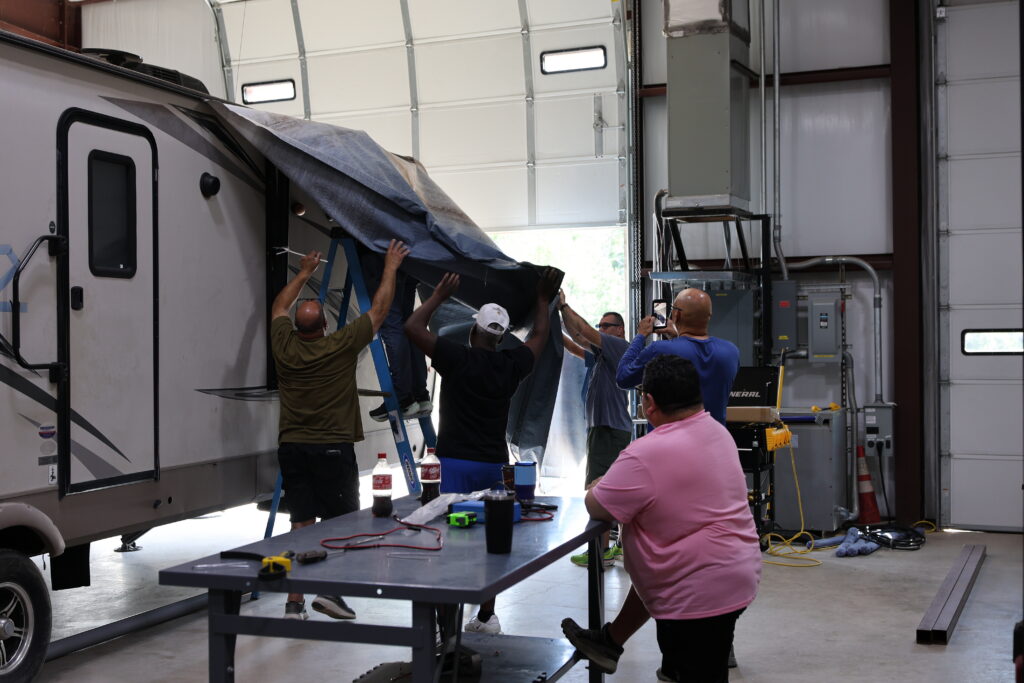
In fact, that’s how most technicians begin. You don’t need years of experience to start learning. You need the right mindset, quality instruction, and a commitment to keep improving.
At NRVTA, many students arrive with little or no previous RV repair experience. Through structured classroom instruction and hands-on labs, they build a strong understanding of the systems that make RVs function. That foundation prepares them to continue developing their skills through real-world experience and ongoing learning. The academy’s programs are intentionally built around practical instruction that combines lecture with hands-on training across the major RV systems.
No school can teach every repair you’ll ever encounter.
No technician knows every answer.
But when you understand the fundamentals, you gain something much more valuable than a list of repairs, you gain the confidence to figure things out.
That’s what carries you through your first service call, your hundredth repair, and every challenge that comes after.
Because becoming an RV technician isn’t about knowing everything before you begin.
It’s about taking the first step, building a strong foundation, and committing to never stop learning.
Frequently Asked Questions
Can I become an RV technician with no mechanical experience?
Absolutely. In fact, Many people enter RV technician training with little or no mechanical background. The key is learning the fundamentals of how RV systems operate and developing troubleshooting skills through quality instruction and hands-on practice.
Do I need to be an electrician or plumber first?
Not at all. However, experience in trades like electrical, plumbing, HVAC, or automotive repair can be helpful, it isn’t required. RV technician training is designed to teach the core systems found in modern recreational vehicles.
What do new RV technicians learn first?
Most training begins with the fundamentals of RV electrical systems, propane systems, plumbing, heating, cooling, refrigeration, water heaters, and safety. Understanding how these systems work creates the foundation for diagnosing and repairing problems later.
Is hands-on training important?
Absolutely. For example, reading manuals and watching videos are valuable, but working directly on RV systems under instructor guidance helps build confidence and practical troubleshooting skills much faster.
Will I ever stop learning as an RV technician?
No, and that’s one of the most rewarding aspects of the profession. RV technology continues to evolve, and experienced technicians continue learning throughout their careers. Every repair and every customer interaction is another opportunity to improve.
Ready to Build Your Foundation?
Whether your goal is starting a new career, expanding your technical skills, launching a mobile RV service business, or simply becoming more self-sufficient with your own RV, everyone starts in the same place: learning the fundamentals.
At the National RV Training Academy, students receive structured classroom instruction paired with hands-on training designed to help them understand how RV systems work and how to troubleshoot them with confidence.
If you’re ready to take the first step, your lack of experience doesn’t have to hold you back.
It might just be the beginning of your next adventure.


Get Registered Today!
Talk to a student advisor to learn more!