LEARN and EARN!
Get your RV Technician Certification in as little as 5 weeks!
For many RV owners, the journey into RV repair starts the same way. Something breaks unexpectedly, frustration sets in, and suddenly hours are spent searching YouTube trying to figure out what went wrong.
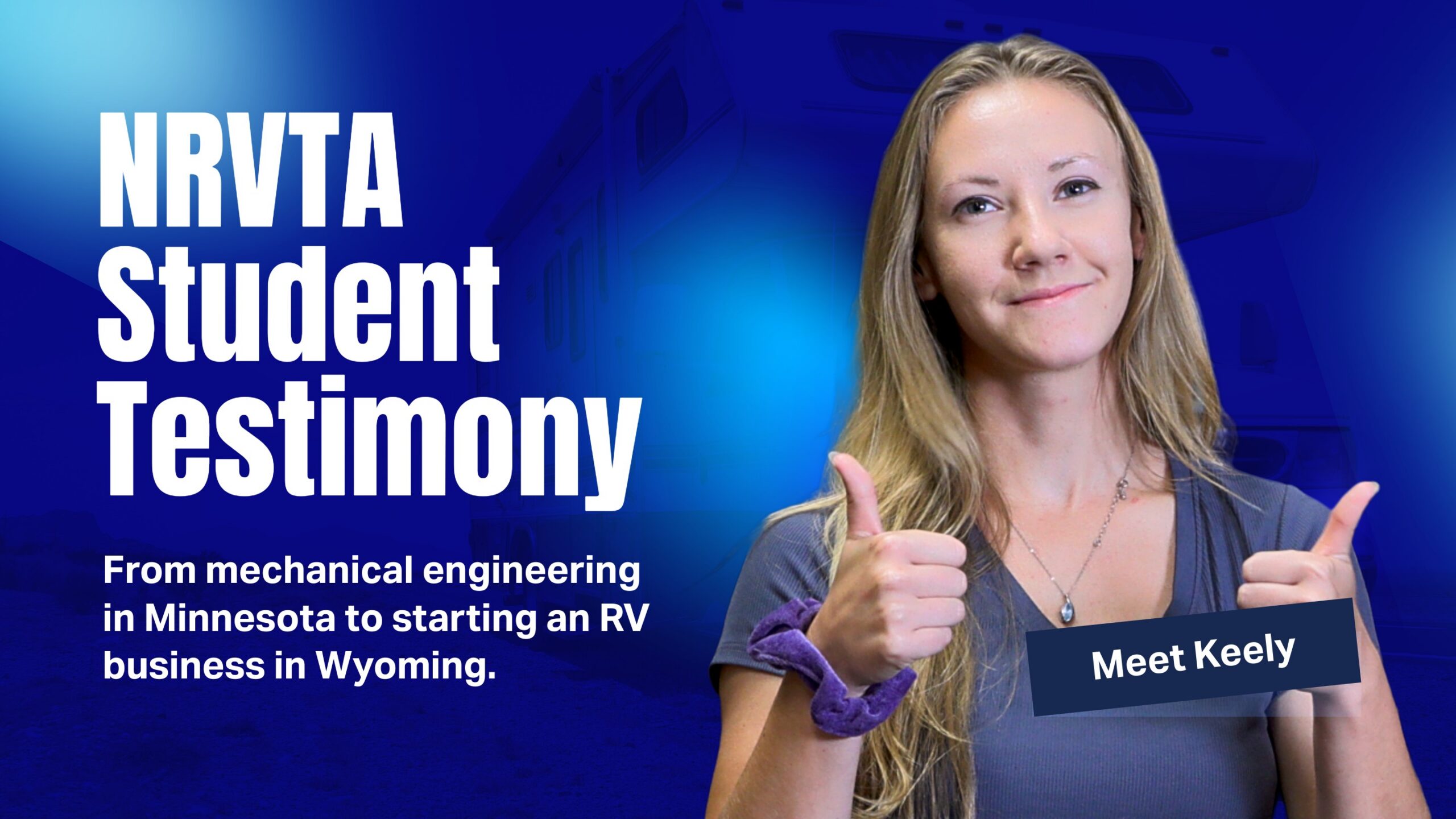
That was exactly how Keely Citrowske found the National RV Training Academy.
Originally from Minnesota with a background in mechanical engineering, Keely moved to Wyoming about a year ago and purchased an RV after relocating. Like many RV owners, she quickly discovered that RV systems can be complicated and unpredictable.
“Things kept breaking and I was on YouTube a lot looking up RV videos,” she explained.
During that search for answers, she came across National RV Training Academy and decided to enroll in training.
Learning the Fundamentals of RV Systems
Keely started with the RV Fundamentals Training course, which provides students with a broad overview of the major systems found inside modern RVs.
She described the first week as a giant overview of everything inside an RV, including propane systems, electrical systems, and safety systems. Todd, the instructor, helped make the learning environment approachable and engaging by keeping things lighthearted while still covering critical technical information.
For students with a mechanical background, the fundamentals course can help connect previous experience to RV specific systems and diagnostics.
Keely said her engineering and hands-on background made the first week feel very manageable.
“If you’re mechanically inclined, you will probably love the first week,” she said.
But for her, the excitement really started once the advanced training began.
Hands-On RV Technician Training
One of the biggest things Keely emphasized was how hands-on the advanced training programs are at NRVTA.
“The teachers all try and keep you out of the classroom as much as possible,” she explained.
Instead of spending most of the day listening to lectures, students spend significant time working directly on RV systems and troubleshooting real world problems.
In the refrigerator course, instructor Terry teaches students how to follow electrical flow through RV refrigerators. Once students understand how the electrical flow works, diagnosing failures becomes much easier.
Keely described how students work through numerous refrigerator problems intentionally placed into training units.
“He throws every bug you can think of on those fridges and you get to sit there and fix them.”
That practical troubleshooting process helps students build confidence while learning how systems actually operate.
Learning Water Heaters, Furnaces, and RV Exteriors
Keely also highlighted the water heater and furnace training led by Sue, describing her as organized and highly knowledgeable.
Students spend most of their time actively working on systems instead of remaining in the classroom.
“You get to fix everything that could possibly break on them,” she said.
The exterior systems course introduced students to RV slide systems and large scale repairs that often require teamwork and coordination.
Keely noted that learning how to remove and work on slides was one of the more collaborative experiences during training because of the size and complexity of many RV slide systems.
“You’re not really going to pull a slide all by yourself,” she explained.
The teamwork environment helped students learn both technical skills and practical shop workflow.
Understanding Electrical Flow Changes Everything
One of the most important concepts Keely discussed was learning how electrical flow impacts RV systems.
“As soon as you figure out the flow of how electrical works in a lot of these systems, you just got to figure out what part is breaking the flow and then that’s what you fix.”
That understanding is a major focus throughout RV technician training at NRVTA. Rather than memorizing parts, students learn how systems operate together and how to systematically diagnose failures.
This approach helps students become more confident troubleshooting RV appliances, electrical systems, furnaces, refrigerators, and other major components.
Starting 307 RV in Wyoming
After completing training, Keely plans to open her own RV business near Jackson, Wyoming, called 307 RV, named after Wyoming’s area code.
Her story reflects a path many students take at NRVTA. Some arrive simply wanting to better understand their RV. Others discover a new career opportunity or business path through the training process.
Keely strongly recommends the academy to both future technicians and RV owners alike.
“Even if you’re not looking to start a business, come learn about your RV and how to fix it.”
Why Hands-On RV Training Matters
Modern RVs contain complex electrical, propane, HVAC, plumbing, and appliance systems that require both technical knowledge and practical troubleshooting skills.
Hands-on training allows students to move beyond watching online videos and begin working directly on real RV equipment in a structured learning environment.
At NRVTA, students gain experience diagnosing issues, tracing electrical flow, repairing appliances, and learning how RV systems work together in real world conditions.
For many students like Keely, that hands-on experience becomes the foundation for greater confidence, self sufficiency, and even future business opportunities in the growing RV industry.

Read More Testimonies:

Jan. 04, 2026
If I Can Do It, Anybody Can! – Eric’s Journey to Becoming a Certified RV Inspector at NRVTA

Jan. 03, 2026
Finding Purpose and Confidence on the Road – Josie’s Journey to Becoming an RV Technician at NRVTA

Jan. 02, 2026
From Paramedic to RV Technician – How Justin Found a New Purpose Through Hands-On Training at NRVTA
Get Registered Today!
Talk to a student advisor to learn more!