LEARN and EARN!
Get your RV Technician Certification in as little as 5 weeks!
RV Inverter Use, Lithium Upgrades, and Electrical Troubleshooting Explained
Understanding your RV electrical system is essential if you want to travel confidently and avoid expensive repairs. In this Tech Tip Tuesday from the National RV Training Academy, Todd answers real questions from RV owners about inverter use, lithium battery upgrades, and diagnosing electrical issues.
When Should You Use Your RV Inverter
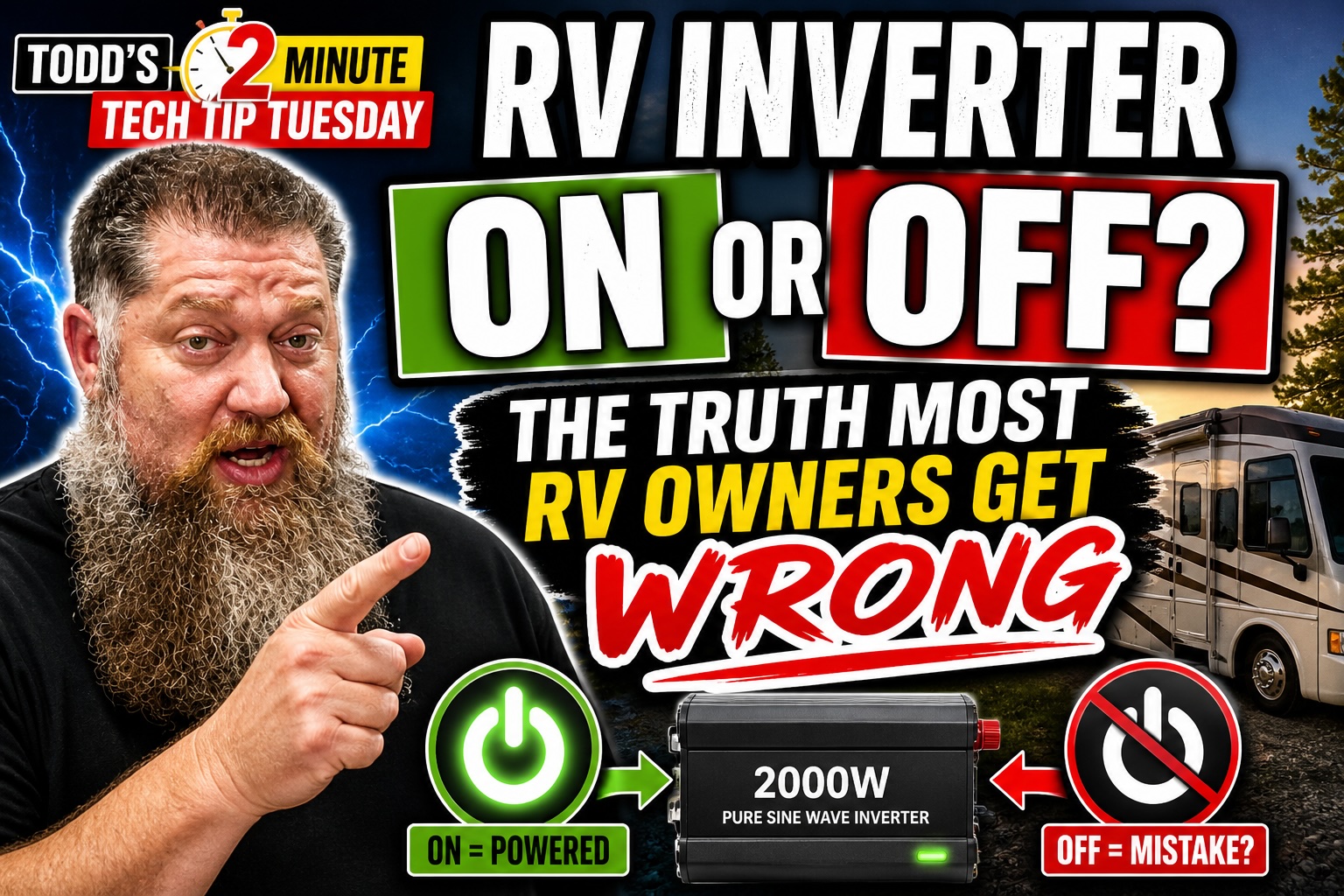
A common question RV owners ask is whether the inverter should stay on while traveling. If you are running a residential refrigerator, the answer is yes. Keeping the inverter on ensures your fridge stays powered while you are on the road.
Once you arrive and plug into shore power, the answer depends on your equipment. Older systems often required manual switching between inverter power and shore power using a transfer switch. These setups required more hands-on management.
Modern systems are much smarter. Most newer inverters include an AC pass through function. This means when you plug into shore power, the inverter automatically allows shore power to take over without needing to turn anything off. This simplifies operation and reduces the risk of user error.
Upgrading to Lithium Batteries and Charging Considerations
Switching to lithium batteries is becoming more popular, but it introduces new considerations. One key question is whether you need a DC to DC charger when your alternator already charges your batteries.
The recommendation is yes. While your alternator can charge your batteries, it does not regulate current effectively. Devices like a battery isolation manager allow power to flow but do not limit it.
A DC to DC charger solves this problem by controlling how much current flows between systems. It protects your electrical components and ensures your lithium batteries charge efficiently. This becomes especially important during high-demand situations when multiple systems are running at once.
Why Current Limiting Matters in RV Electrical Systems
Electricity naturally flows from higher voltage to lower voltage. Without proper regulation, this can cause excessive current flow, leading to heat buildup and potential damage to wiring or components.
Using equipment that limits current helps prevent these issues. This is one of the main reasons professionals recommend adding a DC to DC charger when upgrading battery systems.
How to Inspect Your RV Roof with Solar Panels Installed
Solar panels are a great upgrade, but they can make roof maintenance more challenging. If your panels block access, you still need to inspect seals and service components like air conditioners.
The best approach is to ensure there is a path to critical components when installing panels. If access is limited, you may need to reposition your ladder multiple times to inspect the edges and seals.
In extreme cases where access is completely blocked, removing a panel may be necessary for proper maintenance. Regular inspection is critical to prevent leaks and long term damage.
Troubleshooting RV Electrical Problems and Inverter Shutdowns
If your inverter shuts down immediately when plugging into shore power, you are likely dealing with a short. This means electricity is flowing where it should not.
The most effective way to diagnose this issue is to trace the power path. Start from the shore power cord and follow it through the transfer switch and into the inverter.
Using a multimeter, you can check for continuity in the wiring. If continuity exists where it should not, that indicates a short. Identifying and fixing this early can prevent serious damage to your system.
If the issue is beyond your skill level, it is important to seek help from a qualified technician who understands how to properly test and diagnose RV electrical systems.
Learn More with the National RV Training Academy
Whether you are maintaining your own RV or looking to start a career in the industry, the RV training programs at the National RV Training Academy provide hands-on education that prepares you for real-world scenarios.
You can even build a business helping other RV owners while traveling the country.



Get Registered Today!
Talk to a student advisor to learn more!