LEARN and EARN!
Get your RV Technician Certification in as little as 5 weeks!
When it comes to RV ownership, small mistakes can lead to expensive damage or unsafe conditions. In this tech tip from the National RV Training Academy, Todd answers real questions from RV owners dealing with cleaning concerns and electrical issues during cold weather.
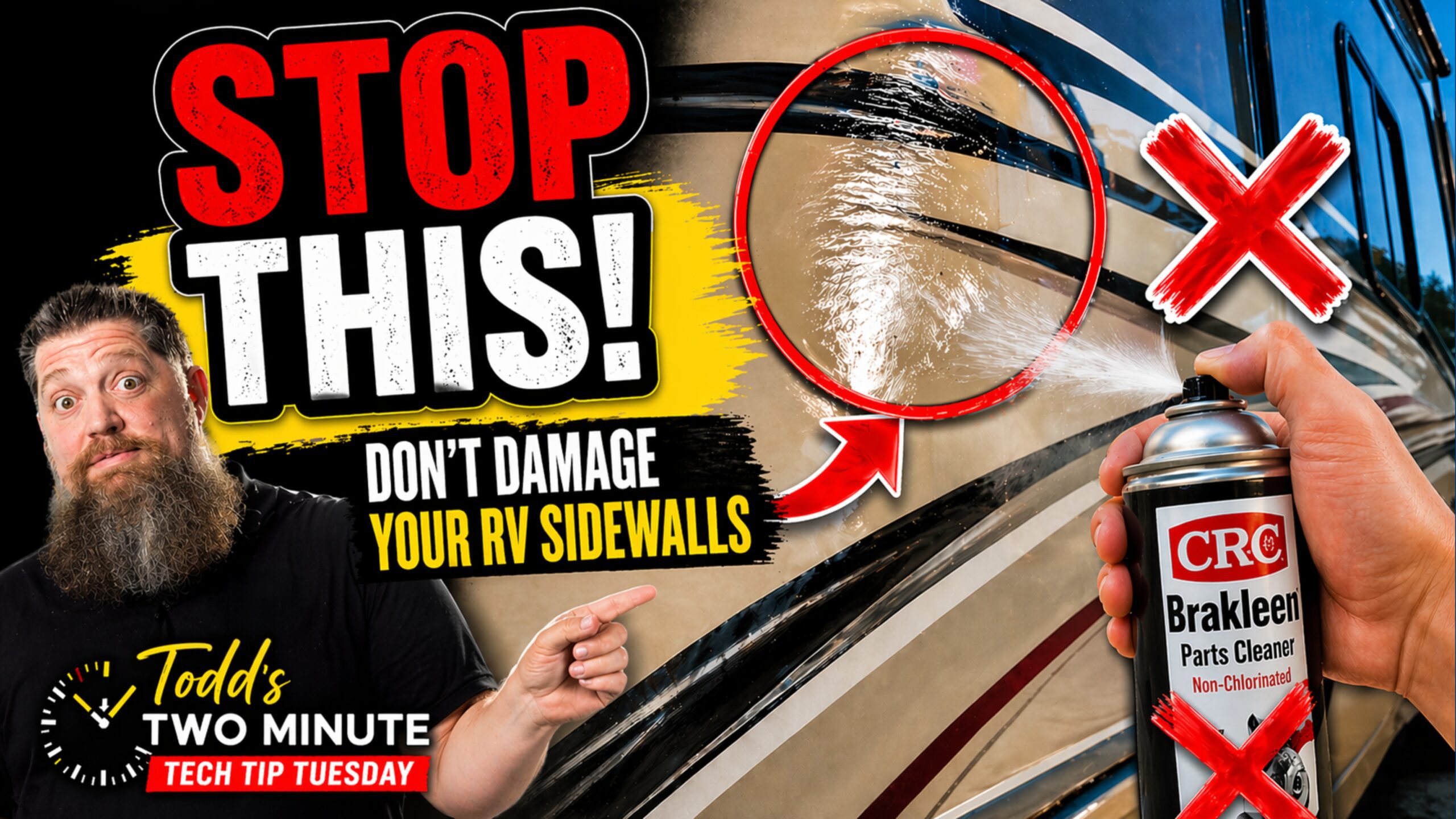
Can CRC Parts Cleaner Damage RV Sidewalls
One of the most common questions involves using CRC parts cleaner on RV roofs. While it can be effective for spot cleaning rubber roofs, it should never be used on the sidewalls of your RV.
If CRC cleaner comes into contact with fiberglass, vinyl graphics, or full body paint, it can leave behind a noticeable sheen that does not match the rest of the surface. This creates a permanent visual inconsistency that can be difficult to correct.
The key takeaway is simple. CRC parts cleaner is only appropriate for rubber roofing materials such as EPDM or TPO when used carefully. Even then, it should be sprayed and wiped quickly to prevent dripping down the sides.
For other materials like PVC roofing, a safer alternative such as vinegar can be used to achieve similar cleaning results without the risk of cosmetic damage.
Understanding proper cleaning methods is an essential part of RV maintenance training and helps prevent avoidable repairs.
Why Space Heaters Trip RV Breakers
Another issue many RV owners face during winter is keeping their rig warm without overloading the electrical system.
Using multiple space heaters might seem like a simple solution, but it often leads to tripped breakers. Most space heaters operate close to the maximum capacity of a standard circuit. When run continuously, the wiring can heat up, causing the breaker to trip as a safety measure.
This is not a malfunction. It is the system doing exactly what it was designed to do.
If a breaker trips and is immediately reset, the wiring may still be hot, increasing the risk of damage over time. This is why repeated tripping should never be ignored.
In some cases, frequent breaker trips can also point to a weak breaker or a loose electrical connection. These components wear out over time and should be inspected if problems persist.
Learning how to diagnose these issues is a core part of RV electrical training.
Safe Ways to Heat Your RV Without Propane
For those looking to avoid propane, there are alternatives. One option mentioned is replacing a propane furnace with an electric furnace system. These systems can heat the RV more safely and evenly but require proper installation and additional wiring.
This is not typically a beginner level project and should be handled by someone with electrical experience.
For those continuing to use space heaters, the safest approach is to run them on low or medium settings rather than high. This reduces the strain on the circuit and allows for more consistent operation over longer periods.
It is also important to ensure heaters are distributed across separate circuits when possible. Running multiple heaters on the same circuit can overload it quickly, even at lower settings.
Protecting Your RV Systems Long Term
Whether it is cleaning your roof or managing your electrical load, the goal is always the same. Protect your RV from unnecessary damage and operate it safely.
Small adjustments like choosing the right cleaner or lowering a heater setting can make a significant difference in performance and longevity.
If you want to gain confidence in handling these types of issues yourself, consider exploring RV technician certification programs that teach real-world skills used every day in the field.



Get Registered Today!
Talk to a student advisor to learn more!