LEARN and EARN!
Get your RV Technician Certification in as little as 5 weeks!
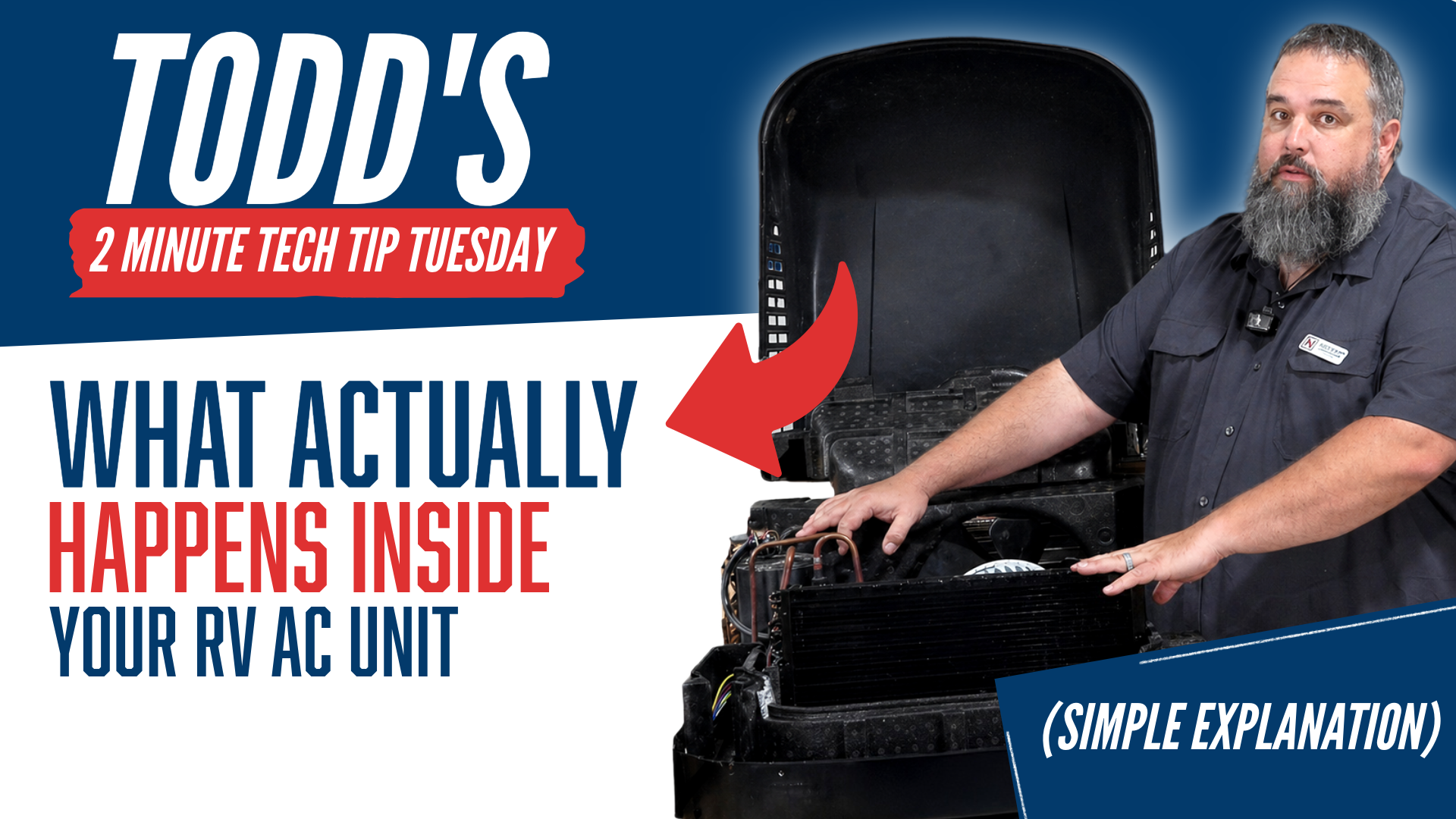
Understanding how your RV air conditioner works is one of the most valuable skills you can develop as an RV owner. Whether you are new to RVing or looking to sharpen your technical knowledge, learning the flow of power and the role of each component can save you time, money, and frustration.
In this breakdown from the National RV Training Academy, we walk through the core components of a Dometic air conditioning system and explain how everything works together to keep your RV cool.
How Your RV Thermostat Controls Everything
Your system begins with the thermostat. This device runs on 12-volt power supplied by your RV battery. When you adjust your thermostat settings, you are sending a signal that tells your air conditioner what to do.
That signal determines whether your system runs the fan on high or low speed or activates the compressor to begin cooling. Even though it seems simple, this small device is what controls the entire cooling process.
Understanding Power Flow in Your RV AC System
Once the thermostat sends a signal, that command moves to the control box. This is typically located in the return air space of your unit.
Inside the control box are relays. These relays act like switches. When triggered by the 12-volt signal, they close, allowing 120-volt power to flow to the rooftop unit through a wiring harness.
This step is critical because it bridges the gap between low-voltage control and high-voltage operation. Without this transition, your air conditioner would not function.
Key Components on the Rooftop Unit
When you move to the rooftop portion of your RV air conditioner, you will find several essential components working together.
The outer cover, known as the shroud, protects everything inside. Once removed, you will see the internal parts that handle cooling.
Two of the most important components are the evaporator and condenser coils. These coils allow refrigerant to move through the system, absorbing heat from inside your RV and releasing it outside.
Air is pulled in, passes over these coils, and is either cooled or expelled depending on its role in the cycle.
The Role of the Fan Motor and Capacitors
The fan motor is responsible for moving air across both sets of coils. This airflow is what allows the system to regulate temperature effectively.
Capacitors play a supporting but critical role. They provide the extra boost needed to start both the fan motor and the compressor. Without capacitors, these components may struggle to start or fail entirely.
Why the Compressor Is the Heart of the System
The compressor is often referred to as the heartbeat of your air conditioner. Its job is to compress refrigerant, which allows the system to remove heat from inside your RV.
It also includes safety features like a heat overload protector. This device monitors temperature and prevents damage if the system begins to overheat.
Rather than instantly producing cold air, your air conditioner continuously cycles air, gradually lowering the temperature until it matches your thermostat setting.
Preventing Damage with Proper Maintenance
One of the most practical takeaways is the importance of regular maintenance. A simple cleaning schedule can make a significant difference in performance and longevity.
It is recommended to clean your coils at least twice a year, ideally in the spring and fall. These seasons provide milder temperatures, making the task easier and more comfortable.
Keeping your coils clean reduces strain on the compressor and helps your system run more efficiently. Neglecting this step can lead to unnecessary wear and costly repairs.
Final Thoughts
Understanding your RV air conditioner is not just about knowledge. It is about confidence. When you know how power flows and how each component functions, troubleshooting becomes easier and maintenance becomes more effective.
If you want to take your skills even further, exploring hands-on training through the RV technician training program can give you the experience needed to diagnose and repair systems with confidence.



Get Registered Today!
Talk to a student advisor to learn more!