
LEARN and EARN!
Get your RV Technician Certification in as little as 5 weeks!
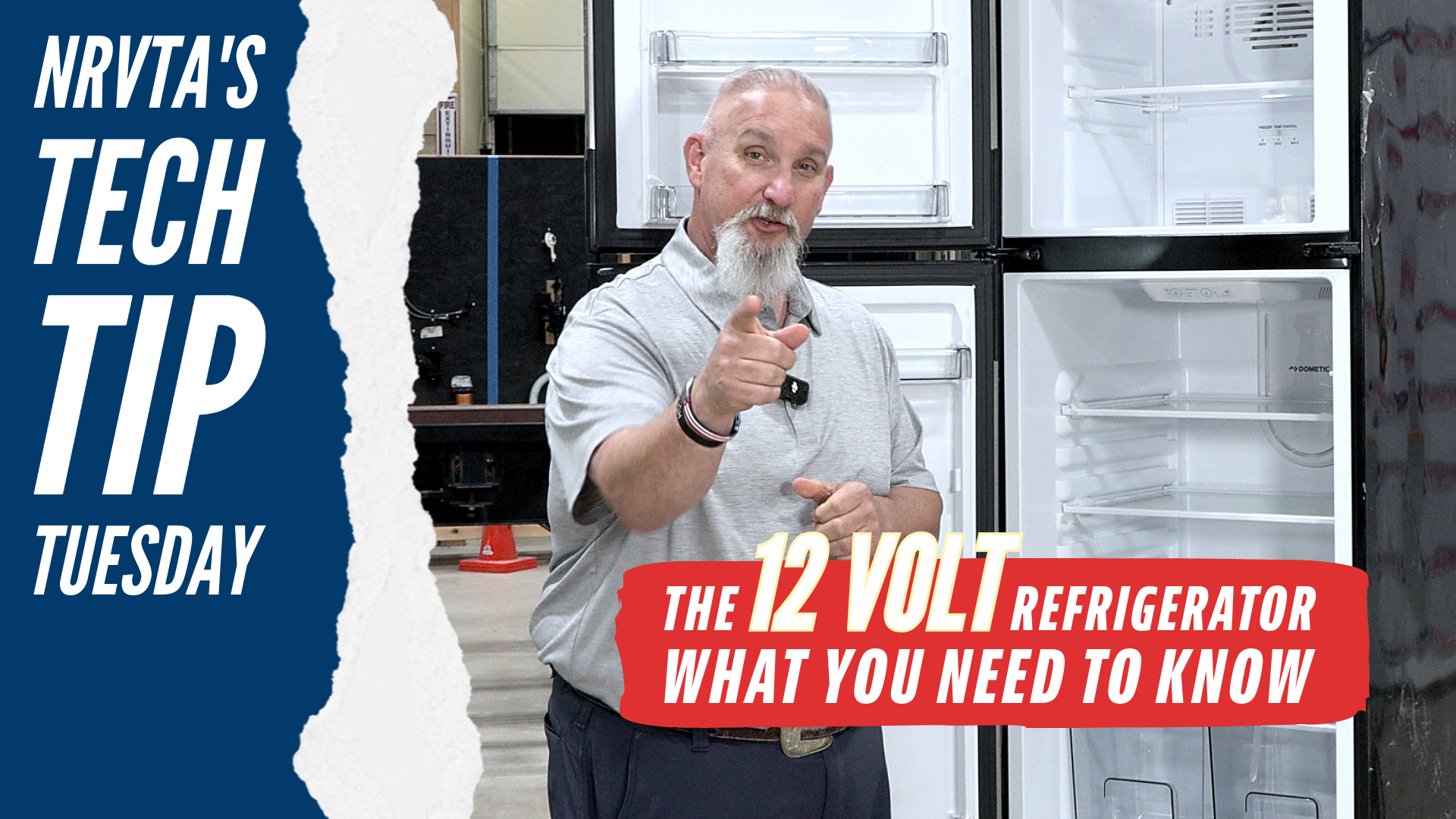
Welcome back to another Two-Minute Tech Tip Tuesday, brought to you by the National RV Training Academy (NRVTA)—the largest hands-on RV training school in America! I’m Brian from the NRVTA, and today we’re diving into one of the most important appliances in your RV: the 12-volt refrigerator.
If you’ve bought a new RV in the past two to three years, chances are high that it came equipped with a 12V refrigerator. These modern, compressor-based units are quickly replacing older absorption models—and for good reason.
Let’s explore how they work, common issues you might face, and the simple maintenance you can do to keep your fridge running strong.
🧊 How Does a 12V RV Refrigerator Work?
12V refrigerators are very similar to the residential fridge in your home. Here’s what makes them tick:
- Compressor-based cooling: Instead of relying on absorption (like older propane models), these fridges use a compressor system, powered by 12 volts.
- Fast cooling: They cool down in about an hour, compared to 8–12 hours for traditional absorption units.
- Runs on your coach battery: That means your fridge can stay cold while you’re driving—no propane needed, making it a safer choice for travel.
- Level doesn’t matter (as much): Unlike absorption models, these fridges don’t need to be perfectly level to function well.
You control both the refrigerator and freezer temperatures using dials or digital panels, and many units include internal fans to distribute cold air more efficiently.
⚠️ Common 12V Refrigerator Problems
Even though these refrigerators are efficient, they’re not immune to a few common issues. Here’s what to watch for:
1. Low Voltage
12V refrigerators depend entirely on your battery system. If your battery isn’t charged or maintained, your fridge won’t perform. Make sure:
- Your battery is in good health
- Connections are tight and corrosion-free
- You’re getting adequate power from solar or shore power when parked
2. Undersized Wiring
Some manufacturers initially installed 12-gauge wire, which is fine for short runs. But if your fridge is more than 12–13 feet from the power source, you need 8-gauge wire to avoid voltage drop. Insufficient wiring can cause poor performance or failure.
3. Fan Adjustment Issues
Is your freezer cold but your fridge warm? Many 12V fridges let you adjust fan settings:
- A control panel inside the freezer lets you redirect airflow to improve refrigerator cooling.
- Try setting the fan from mid to min—this pushes more cold air into the fridge section while keeping the freezer frozen.
🛠️ Easy Maintenance Tips
Like any appliance, a little maintenance goes a long way. Here are a few easy things you can do to extend the life of your 12V fridge:
1. Clean the Underside
The compressor is on the bottom of the fridge. Over time, pet hair and dust collect under there. Use a vacuum with a crevice tool to keep it clean and ensure proper airflow.
2. Check the Door Seals
A weak door seal lets cool air escape and makes your fridge work harder. Use the dollar bill test:
- Close the door on a dollar bill
- Gently tug the bill—if it slides out easily, the seal might be weak
- Use a hair dryer (NOT a heat gun) to gently warm and reshape the gasket for a tighter seal
3. Defrost the Freezer Properly
If ice builds up, do not use sharp tools to remove it. Instead:
- Turn down the fan
- Open the door and let the ice naturally melt
- Wipe away excess water with a soft towel
4. Understand Error Codes
If your fridge displays an error code (often using snowflake symbols), don’t panic. Contact the manufacturer or a certified technician to identify the issue.
Need a certified RV tech? Visit RVHelp.com to find one near you.
💡 Final Thoughts
12V refrigerators are a major upgrade in terms of efficiency, safety, and cooling performance. With just a little preventative maintenance and a basic understanding of how they work, you can keep your fridge running like a champ all season long.
Whether you’re a weekend warrior or full-timer, understanding your RV’s systems helps you stay comfortable and self-sufficient on the road.
Looking to learn more about how your RV works—or even become a certified technician yourself? Join us at the National RV Training Academy for the best hands-on RV education in the country.



Get Registered Today!
Talk to a student advisor to learn more!