
LEARN and EARN!
Get your RV Technician Certification in as little as 5 weeks!
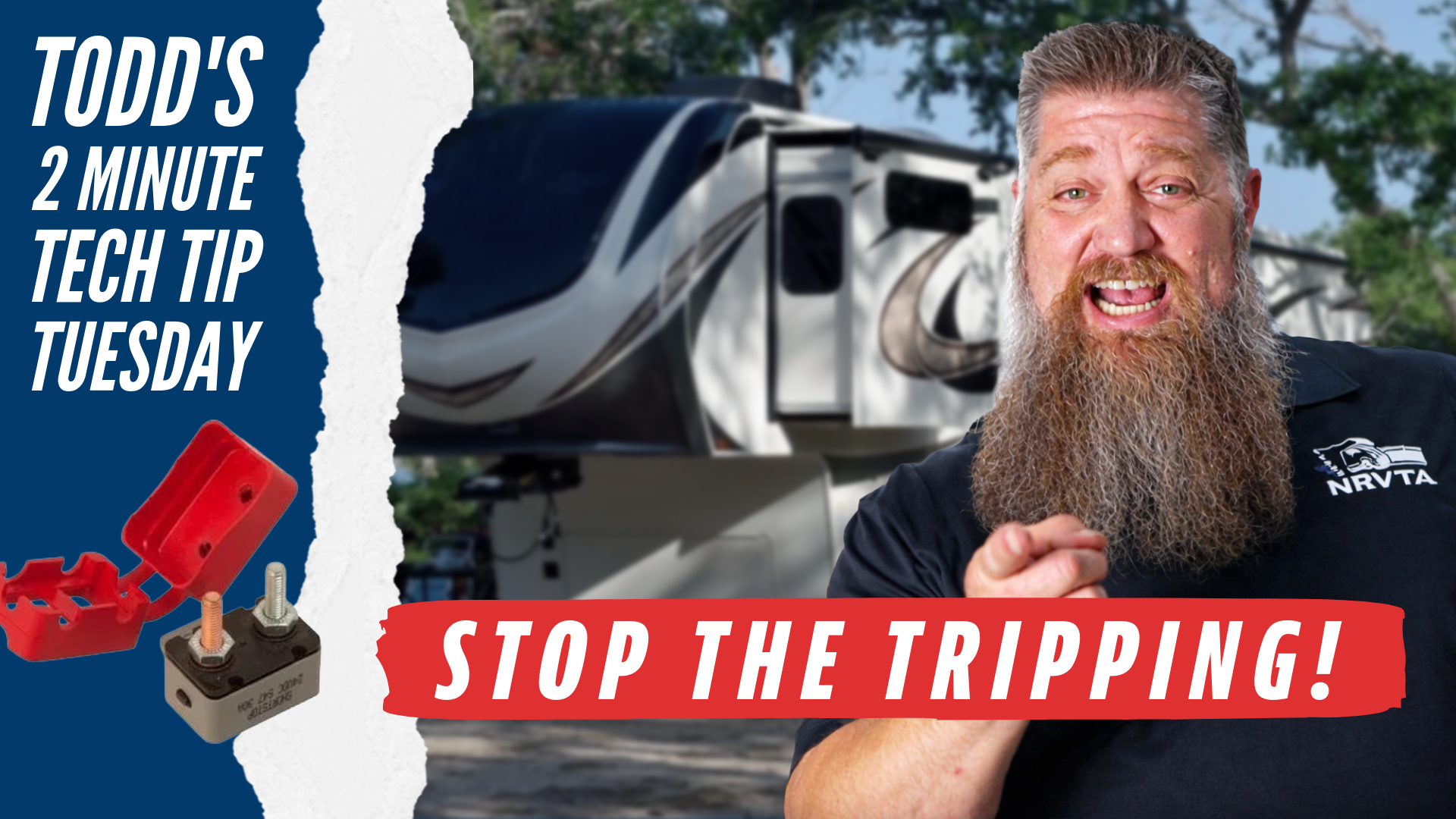
Why Your RV Breaker Keeps Tripping and What It Really Means
If your RV breaker keeps tripping and you cannot figure out why, you are not alone. This is one of the most common electrical questions RV owners ask, especially those living off grid or relying heavily on their battery systems.
In this Tech Tip Tuesday from the National RV Training Academy, Todd answers a real question from an RV owner dealing with a resettable 12-volt breaker that trips inconsistently. Sometimes it works fine. Other times, it shuts things down without warning. That kind of unpredictability can be frustrating, but the explanation is simpler than most people think.
Understanding Why Breakers Trip
At its core, a breaker is designed to protect your RV. It trips when too much current flows through a wire, preventing overheating and potential damage. This is standard across any RV electrical system, and it is doing exactly what it was designed to do.
But what happens when nothing has changed and the breaker still trips?
That is where things get interesting.
When the Problem Is Not Your Power Usage
In the scenario Todd describes, the RV owner is running a battery setup with multiple 12 volt batteries and using a generator when needed. That setup represents supply, not demand.
Electrical current is demand-based. That means power is only pulled when devices require it. So if you have not added any new appliances or components to your system, your demand has not increased.
This eliminates one of the most common causes of breaker trips.
Breakers Wear Out Over Time
One of the most overlooked issues in RV maintenance is that breakers do not last forever.
Every time a breaker trips, a small electrical arc occurs inside it. That arc creates carbon buildup on the internal contacts. Over time, this buildup reduces the quality of the connection.
As the connection degrades, the breaker becomes more sensitive. Eventually, it starts tripping more easily even under normal operating conditions.
In other words, your breaker may not be protecting you from a new problem. It may simply be worn out.
Environmental Damage Can Make It Worse
Many RV breakers, especially those mounted underneath the unit, are exposed to the elements. Moisture, dirt, and road debris can all contribute to corrosion.
Corrosion increases resistance and can cause breakers to trip earlier than they should. If your breaker is located outside, this is an important factor to consider.
This is especially true for RV owners who travel frequently or live in varying climates.
The Most Likely Fix
If you have not increased your electrical load and your breaker is tripping inconsistently, the most likely solution is simple.
Replace the breaker.
Todd specifically mentions short stop breakers, which are commonly used in these setups. Switching to a self resetting version can make your life easier by eliminating the need to manually reset it underneath your RV.
For many RV owners, this is a quick and inexpensive fix that solves the problem immediately.
Learn to Diagnose RV Electrical Problems with Confidence
Understanding issues like this is what separates guesswork from real RV technician training. When you know how your system works, you can identify problems faster and fix them with confidence.
At the National RV Training Academy, students get hands-on experience working with real RV systems, learning how to troubleshoot everything from electrical issues to appliances.
If you want to stop guessing and start knowing, investing in the right training can make all the difference.



Get Registered Today!
Talk to a student advisor to learn more!